Try it in your pool for 30 days. Exchange it for another Dolphin for free, or return it with no restocking fee.
Your bag is empty.
Commercial & Specialty Pools
Robotic Pool Cleaners for Community Pools
Start with a tape measure: at 50 ft or under, a residential robot keeps a neighborhood pool clean between service visits, and over that length it does not.
Our shortlist focuses on Dolphin models available with authorized-dealer support. The buying criteria below also give you a useful framework for evaluating alternatives from any brand.
Before you buy
Every robot here stops at a 50 ft pool. A community pool at or under that length can use one between service visits; a longer pool needs a commercial-rated robot. Wading pools are too shallow for these robots, and a residential warranty may not cover community use, so confirm before buying.
The words community pool cover a lot of water. They can mean a 20 x 40 ft rectangle behind a neighborhood clubhouse, or a 25-yard pool with six lanes, a diving well and a wading pool beside it. A robotic pool cleaner for community pools can only be chosen once you know which of those you have, because every robot on this page is rated for pools up to 50 ft and no further.
At or under that length the job is familiar: keep the floor, walls and tile line clean in the days between service visits, while dozens of swimmers a day stir in sunscreen, hair and grit. The Premier, the Sigma and the Dolphin Quantum all do it. Above 50 ft, the honest answer is a different class of machine.
$0 restockingNo-cost exchanges
Free shippingNationwide
Up to 3 yearsPremier & Sigma
30-day trialIn your own pool
Expert shortlist
Three Robots Ranked for Community Pools 50 ft and Under
Ranked for this job, with the reason each model earned its place and the point where it stops being the right choice.
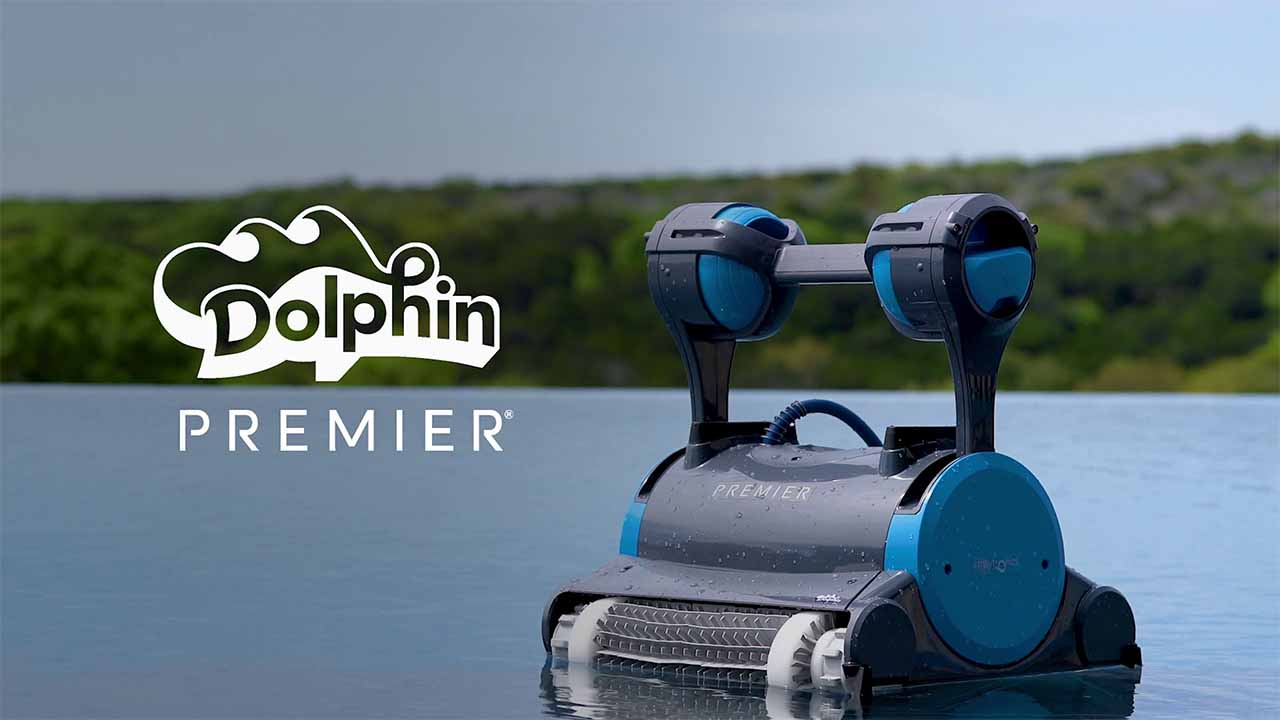
Heavy use is a filtration problem first, and the Premier ships with the answer in the box: NanoFilters for the fine material swimmers leave behind, standard fine filters for ordinary days, and an oversized leaf bag for the morning after a storm. Swapping takes seconds through the top, with no tools.
Dual commercial-grade ProLine motors move 4,500 gallons per hour while dual brushes scrub floor, walls and waterline across a 3-hour cycle. The weekly timer on the power supply runs it every day, every 2 days or every 3 days, so pool staff have nothing to pair or log into.
Best for
Neighborhood pools up to 50 ft with daily crowds and a weekly service visit.
Keep in mind
Its 3-hour cycle is the longest here. With late closing and early lap swim, check the window first. It weighs 20.3 lb.
The Sigma brings the most brush contact of the three: quad scrubbing brushes driven by three commercial-grade ProLine motors, also at 4,500 GPH. On a waterline that takes a full day of sunscreen, that extra scrubbing is the reason to pay more. Its NanoFilters are described as filtering down to 2 microns.
SmartNav 3.0 with an onboard gyroscope helps it hold a pattern in freeform community pools, and the myDolphin Plus app schedules cycles by day and time, useful when weekend hours differ from weekdays. It finishes in 2.5 hours and carries a 3-year warranty.
Best for
Busy pools where the tile line is the standing complaint and a manager will use the app.
Keep in mind
Highest priced and heaviest at 24.6 lb. Its filters are cartridges, and the scheduling lives in the app.
Community pools tend to have generous entry steps and, in newer builds, a sun shelf. Both are in the Quantum's published coverage along with floor, walls and waterline, which makes it the pick when the entry end is where the dirt sits. Its dual HyperBrushes spin at twice the speed of standard brushes.
The cycle is 2 hours, the shortest here. The XXL MaxBin basket opens from the top with one click, NanoFilter panels are included, and a three-preset timer on the power supply handles the routine. It is the lowest-priced of these three.
Best for
Pools with wide steps or a sun shelf, or a short gap between closing and morning swim.
Keep in mind
Flow is 4,000 GPH against 4,500 on the other two, and its warranty is 2 years, a year shorter than theirs.
How we ranked them: We matched filtration, brush system, coverage, debris capacity, automation, and warranty to this page's buying need. Pool fit carries more weight than the longest feature list.
Buying criteria
What Decides the Right Robot for a Community Pool
01
The 50 ft Line
A robot's pool rating refers to the longest straight run, not the diagonal and not the surface area. Fifty feet is the ceiling for the picks here, and a pool at 55 ft is over it. Rounding down to make a robot fit leaves the far end short of coverage.
02
Bather Load
More swimmers means more of the debris you cannot see settling: lotion, hair, lint from suits, dust walked in on feet. Much of it is finer than leaves or sand, so a fine filter option such as NanoFilters matters more here than basket size alone.
03
The Tile Line
Sunscreen and oils float, then stick where the water meets the tile. A robot that climbs to the waterline and scrubs there slows the build-up between hand cleanings. It will not lift a hardened scale line; that takes tile cleaner and effort.
04
A Schedule Around Open Hours
A community pool may be open twelve hours a day. Cleaning happens in what is left, and never with swimmers in the water. A timer or an app schedule means the cycle does not depend on someone staying late to press a button.
Side-by-side
How the Three Compare for Community Use
Only the models recommended on this page, and only the specs that decide this choice.
Measure the longest straight run of water, wall to wall, including any lap lane that extends past the main body, and compare it with the table below. The cable is a second check. All three picks carry 55 ft of it, and the power supply has to sit back from the edge by the distance in the manual, so plan to place it near the middle of a long side where the cable can reach both ends.
Width and gallons do not rescue a pool that is too long.
Pool
Longest run
Fit for these robots
Neighborhood rectangle, 20 x 40 ft
40 ft
Yes
25 x 50 ft pool
50 ft
Yes, at the top of the rating
30 x 60 ft pool
60 ft
No: commercial-rated robot
25-yard pool
75 ft
No: commercial-rated robot
25-meter pool
82 ft
No: commercial-rated robot
Wading or toddler pool
Any
No: too shallow
Wading Pools, Zero-Depth Entries and Top Steps
A robot needs enough water to submerge fully and pull flow through its filter, and a wading pool does not have it. The same limit applies to the shallow strip of a zero-depth entry: expect the robot to clean the deeper water and leave the last few feet of slope. We do not quote a minimum depth here; the figure is in each manual.
Top steps are a similar story. Most robots leave them, and among these picks only the Quantum lists stairs in its published coverage. Plan on a brush or a hand vacuum for anything ankle-deep.
The Filter Routine Under Heavy Use
A robot at a busy pool fills faster than the same robot in a backyard. In peak season, empty and rinse the filter after every cycle instead of once a week. NanoFilters load quickly because they hold fine material; when a robot slows or stops climbing, a clogged filter is the usual cause.
None of this replaces sanitizer or circulation. A robot removes what has settled or stuck. It does nothing for water chemistry, and it comes out of the pool before shock or other chemicals go in.
If the Pool Is Over 50 Feet
Do not buy two residential robots to cover a 75 ft pool, and do not run one in half of it. The rating reflects the cable, the cycle and the navigation built for a pool of that size; in a longer pool the far end goes short. A commercial-rated robot has the cable, the filter capacity and the warranty terms for the duty. Send us the dimensions, depth and open hours and we will point you to the right class of machine. Ask a pool expert.
Running a Robot at a Community Pool
Measure wall to wall along the longest run, then again along any lane that juts past the main rectangle.
Clear floats, toys and any rope from the water before the robot goes in, so the cable has a free run.
Start the cycle once the last swimmer is out and the gate is locked, and lift the robot out before opening.
Look at the floor each morning for a week and set the timer from what you see: every day in peak season, every 2 or 3 days when use is light.
Buy with confidence
Protection beyond the product.
Buying through an authorized dealer gives you a clear warranty and support path. When purchased here, every featured cleaner also includes free shipping, a 30-day in-pool trial, and $0 restocking on returns.
How do I know if our community pool is too big for a residential robotic pool cleaner?
Measure the longest straight run. If it is more than 50 ft, the pool is too big for every robot on this page, whatever its width or gallons. At 50 ft or under, all three picks are in range.
Can a robotic cleaner do the wading pool too?
No. Wading and toddler pools are too shallow for these robots to submerge and run properly. Clean them with a hand vacuum or brush, and check the robot's manual for its minimum depth before trying it in any shallow area.
Will a robot get rid of the sunscreen line on the tile?
It helps keep one from building. The three picks climb to the waterline and scrub there every cycle, which slows the film that forms after a busy day. A line that has already hardened, or scale from hard water, still needs tile cleaner and a brush.
Can a smaller robot like the Dolphin Cayman handle a small community pool?
Only a pool of 33 ft or less, and with a gap: it cleans floor and walls but not the waterline, which is where a busy pool shows its use first. That is why it sits off this shortlist. The Escape is a backyard robot with a 40 ft cable and no standard timer, and is the wrong tool here.
Commercial & Specialty Pools
Keep Exploring
Compare another buying need or open the complete guide library.
First, length: over 50 ft, a commercial-rated robot is the answer and nothing here should be stretched to fit. At 50 ft or under, choose on what the pool shows after a busy weekend. Fine haze and a mixed debris load point to the Premier. A stubborn tile line and a manager with a phone point to the Sigma. Dirty steps and a short overnight window point to the Quantum. Confirm community-use warranty terms before paying.