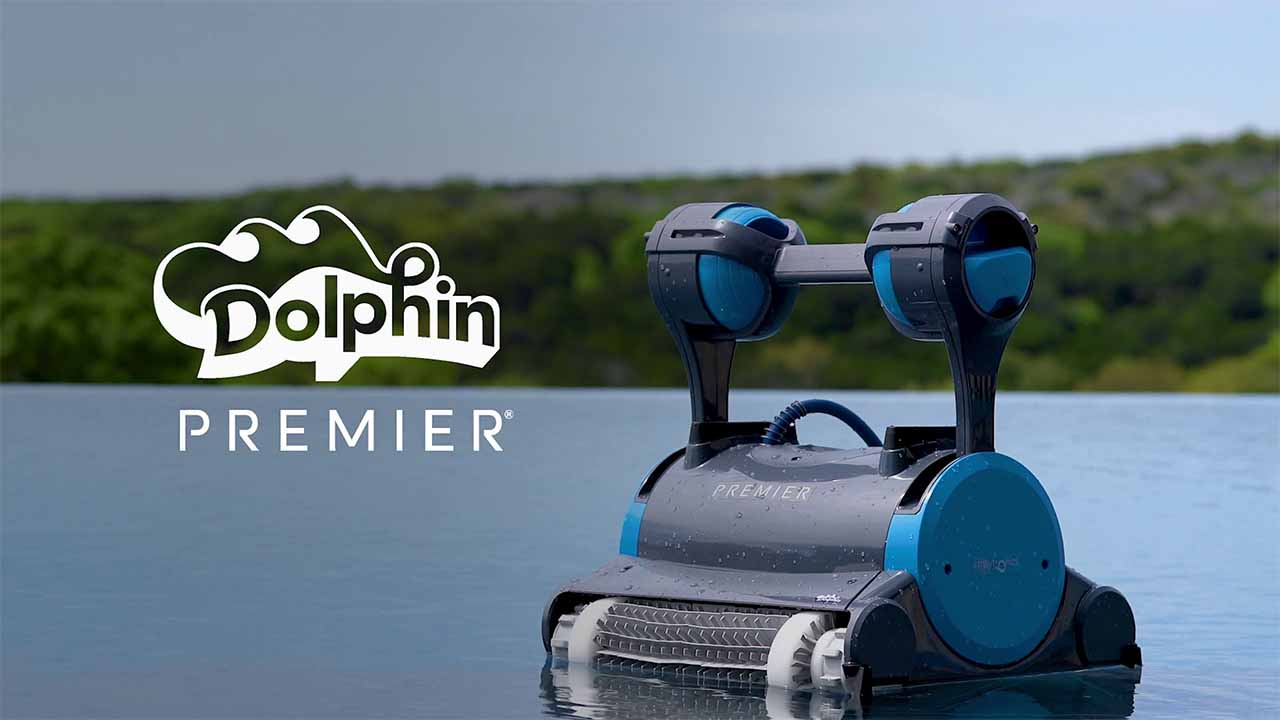
Our shortlist focuses on Dolphin models available with authorized-dealer support. The buying criteria below also give you a useful framework for evaluating alternatives from any brand.
Paint is the least expensive way to finish a concrete or plaster pool, and it comes with a habit the other finishes do not have: it chalks. As epoxy, acrylic or rubber-base paint ages under sun and chlorine, its surface breaks down into a fine white powder. Rub a wall with your palm. If your hand comes away white, the pool is chalking.
That powder is why choosing the best robotic pool cleaner for painted pools comes down to the filter. Chalk clouds the water whenever something disturbs it, a robot's brushes included, and it is fine enough to pass through standard filter media and drift back out. A robot with ultra-fine filters takes it out of the pool. A robot without them mostly moves it around.
$0 restockingNo-cost exchanges
Free shippingNationwide
Up to 3 yearsPremier & Sigma
30-day trialIn your own pool
Expert shortlist
Robots for Painted Pools, Ranked by Fine Filtration
Ranked for this job, with the reason each model earned its place and the point where it stops being the right choice.
A painted pool's debris changes: chalk most of the year, leaves in fall, flakes when the coating nears the end of its life. The Premier's Multi-Media filtration answers each. NanoFilters capture the white powder, standard fine filters handle ordinary weeks, and the oversized leaf bag takes leaves and paint flakes without blinding a fine filter. All three come with the robot and swap in seconds from the top. A full-filter indicator on the power supply shows when chalk has loaded the filter, which on a painted pool happens fast. It scrubs floor, walls and waterline on a 3-hour cycle.
Best for
Painted concrete or plaster pools up to 50 ft that chalk, especially ones that also collect leaves.
Keep in mind
There is no phone alert, only the indicator on the power supply, and NanoFilters need rinsing after every cycle on a chalking pool.
The Sigma also ships with NanoFilters alongside standard cartridges, so it is equipped for chalk from day one. Its advantage on paint is brushing: quad scrubbing brushes lift loose chalk off floor, walls and waterline in fewer passes, and its three commercial-grade ProLine motors keep 4,500 GPH moving through the cartridges. A filter alert arrives through the myDolphin Plus app, a real convenience when fine cartridges are loading with powder every cycle, and the same app schedules by day and time. The cycle runs 2.5 hours. It sits second because it costs more.
Best for
Owners who want the most brushing on a chalky surface and a phone alert when the filters need rinsing.
Keep in mind
The most expensive robot here and, at 24.6 lb, the heaviest; its filters are cartridges to rinse one by one.
Among the robots that include ultra-fine filtration, the Quantum has the lowest price: a full set of NanoFilter panels comes with it, along with standard panels. They sit in the XXL MaxBin basket, whose filter surface tops 400 square inches, and more surface gives chalk more room before it chokes the flow. It is a top-load basket with a one-click lid, so the after-cycle rinse is quick. Its twin HyperBrushes rotate twice as fast as standard brushes, and floor, walls and waterline are covered in a 2-hour cycle.
Best for
Painted pools up to 50 ft where the budget is tight and fine filtration cannot be an extra.
Keep in mind
You get 2 years of warranty, and no waterline robot here has a shorter cycle than its 2 hours.
Plenty of painted pools are older, smaller concrete pools, and for those of 33 ft and under the Cayman is rated for the job. Concrete and plaster are on its published surface list. Floor and walls are scrubbed by one HyperBrush running at double standard Dolphin brush speed, and a 2-hour clean goes out on the timer daily, which keeps chalk from building into a visible layer. The catch is the filter: the MaxBin basket ships with fine panels, and the NanoFilter panels that hold chalk are an optional add-on.
Best for
Painted pools of 33 ft or less, provided the NanoFilter panels are added at purchase.
Keep in mind
Without the add-on panels chalk passes through, and it cleans floor and walls only, on a cable with no swivel.
How we ranked them: We matched filtration, brush system, coverage, debris capacity, automation, and warranty to this page's buying need. Pool fit carries more weight than the longest feature list.
Buying criteria
What a Painted Pool Asks of a Robot
01
Ultra-Fine Filters, Included or Extra
Chalk is the main debris in an aging painted pool, and only ultra-fine media hold it. Three of our picks include NanoFilters or NanoFilter panels in the box. On the fourth they are an optional add-on, which changes the real price.
02
How Easily the Filter Rinses
Fine filters in a chalking pool load quickly and need rinsing after every cycle. You will repeat that chore often, so filter access counts: media that lift out and hose off without tools, and an indicator or alert that tells you when flow is choked.
03
Brushing That Lifts Chalk
Chalk left on the wall comes off on swimmers and suits. Brushes lift it so the filter can take it away. More brush contact clears a chalking surface in fewer cycles, and waterline cleaning reaches the band that gets the most sun.
04
The State of the Paint
A robot suits sound paint that is chalking. If the coating is blistering, peeling or flaking, the robot will pick up the flakes, but it cannot fix what is causing them. That pool needs repainting more than it needs a new cleaner.
Side-by-side
Filters, Brushes and Cycles Compared
Only the models recommended on this page, and only the specs that decide this choice.
All pool paints wear from the surface inward. Sunlight and sanitizer break down the binder in the top layer, and the pigment it held is left as loose powder. Epoxy generally lasts longest and acrylic is the shortest-lived, with rubber-base paint between them, but all three chalk before they fail.
For a robot this has two consequences. The first cycles in a chalking pool often make the water look worse, because the brushes lift powder faster than any filter can catch it. And fine filters fill fast: one that would go days between rinses in a plaster pool may need the hose after every run here.
Flaking and Blistering Paint: What a Robot Can and Cannot Do
Chalking is normal aging. Blisters, peeling sheets and flakes on the floor are coating failure. A robot will collect the flakes, and a leaf bag or standard filter is the right media for them. It cannot stop more from coming, and its brushes will knock loose paint that has already let go of the wall. Soft brushes do not strip paint that is still bonded.
None of these robots lists paint as a surface in its own right. Their lists name what lies under the coating: plaster on all four, along with concrete or gunite. The Escape lists gunite but not plaster, and needs add-on panels for chalk, so it is not ranked. If the paint is failing, plan the repaint first.
A Filter Routine for a Chalking Pool
Chalk is manageable if the filter routine is strict:
Run NanoFilters whenever the palm test comes up white.
Rinse them with a hose after every cycle until the water runs clear.
Leave the pool pump and filter on during and after the cycle to catch what the brushes stir up.
If the robot slows or stops climbing mid-cycle, a loaded filter is a likely cause. Rinse it and restart.
Take the robot out before shocking or adding chemicals, and put it back once the water is balanced.
Getting Started in a Painted Pool
Do the palm test on a wall before you buy. White residue means ultra-fine filters are not optional for your pool.
Expect cloudy water for the first few cycles as loose chalk lifts, and run those cycles on consecutive days.
After repainting, wait out the paint maker's full cure time before filling, and before the robot goes back in.
Buy with confidence
Protection beyond the product.
Buying through an authorized dealer gives you a clear warranty and support path. When purchased here, every featured cleaner also includes free shipping, a 30-day in-pool trial, and $0 restocking on returns.
Will a robotic pool cleaner for painted pools wear the paint off?
Not sound paint. The brushes are soft and the tracks are rubber, and paint that is properly bonded stays put. What a robot removes is the loose chalk on top and any paint that has already blistered or lifted. If large areas come away under a robot, the coating had failed before the robot arrived.
Why is my painted pool cloudy after the robot runs?
The brushes have lifted chalk into the water and the filter did not hold all of it. Either standard filters are fitted, which chalk passes through, or the fine filters loaded up partway through the cycle. Fit NanoFilters, rinse them after each run and keep the pool pump on.
How soon after repainting can I use a robot?
Follow the paint manufacturer's cure time, which varies with the paint type and the weather, and do not shorten it. Paint that has not cured can mark or lift. Once the pool is filled and balanced, the robot can go back to work.
Do I need NanoFilters all year?
Only while the paint is chalking or when fine dust is the main debris. New paint may not chalk for a few seasons, and standard fine filters are enough then. Keep the NanoFilters for when the palm test turns white. With the Premier, Sigma or Quantum you already own both kinds, so switching costs nothing.
Does the type of paint change which robot to buy?
Not much. Epoxy, acrylic and rubber-base paints all chalk eventually, and the answer to chalk is the same: ultra-fine filters and regular brushing. Glossy new epoxy is slicker than old paint, so watch the first cycle to see how the robot handles the walls.
By Pool Surface
Keep Exploring
Compare another buying need or open the complete guide library.
Buy for the filter. If the paint is chalking you need ultra-fine media, and the simplest route is a robot that includes it: the Premier for filter range, the Sigma for brushing and alerts, the Quantum for price. In a small painted pool, 33 ft or less, the Cayman works once the NanoFilter panels are added. If the paint is flaking, spend on the repaint first. A robot keeps a painted pool clean; it does not extend the life of the paint.