How to Tell a Semi-Inground Pool From an In-Ground One
Owners inherit pools with houses, and the paperwork is not always in the drawer. The surest answer is the maker's plate or the original order: if the pool was sold as an above-ground, on-ground or semi-inground model, it is above-ground construction however deep it sits. Failing that, look for these signs:
- Walls: corrugated steel, aluminum or resin panels, or insulated panels a couple of inches thick, under a top rail or coping.
- Liner: vinyl, hung from a bead track at the top of the wall, with a soft cove where wall meets floor.
- Floor: a sand, foam or troweled base under the liner, flat or gently dished.
- Height: part of the wall stands above grade, sometimes hidden behind decking.
Sizing: The 33 Ft Line and the Cable Check
Start with length. Measure the longest straight run of water: the diameter of a round, the long axis of an oval. At 33 ft or under, both robots are inside their rating.
Then check the cable, which is a separate question. The power supply cannot sit at the water's edge: the manual gives a setback distance. Purely as an illustration, take roughly 12 ft. The Escape's 40 ft cable would then leave about 28 ft to cross the pool edge, drop to the floor and reach the far wall. On a round bigger than about 24 ft that gets tight, and the Cayman's 50 ft cable is the safer choice. Use the figure in your own manual, and measure from where the power supply will really sit.
Semi-Inground Pools Longer Than 33 Ft
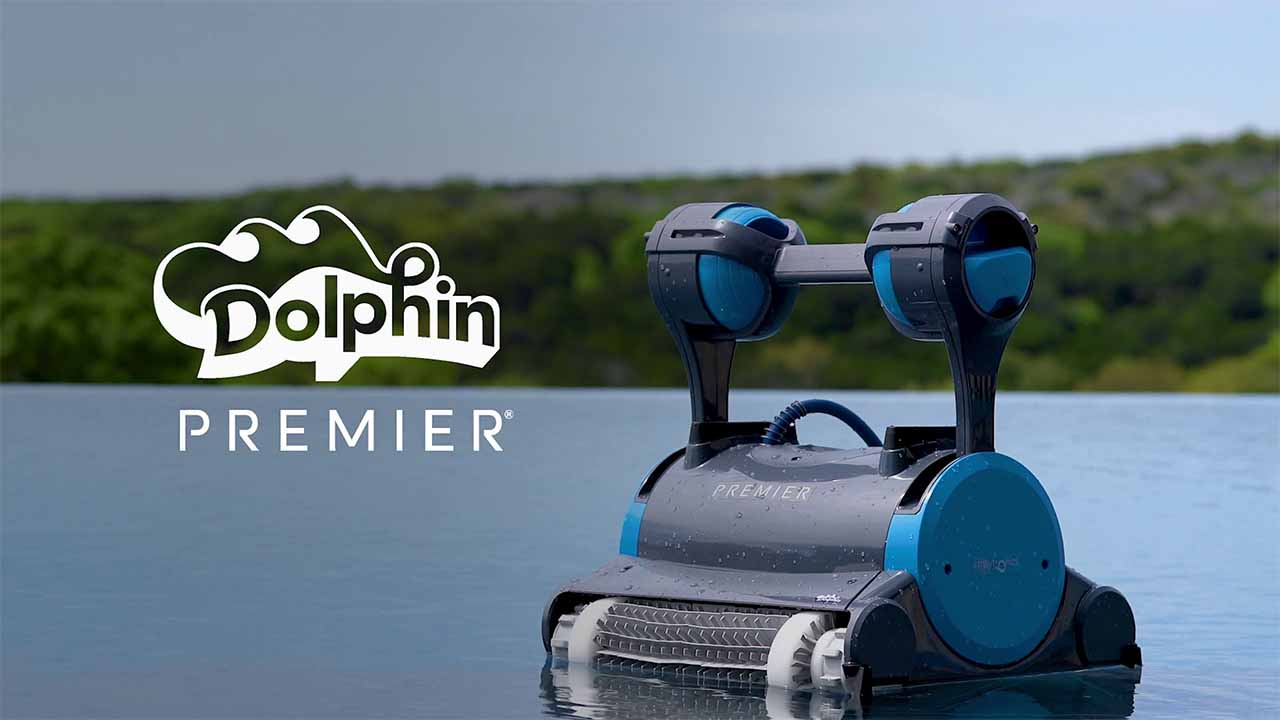
Some oval and insulated-panel models are built longer than 33 ft. That puts them outside the rating of both picks, and we will not tell you to stretch it. The in-ground ProLine robots in these guides, the Premier, Sigma and Quantum, are rated to 50 ft but are not listed for above-ground-style construction, so recommending one from a product page would be a guess. Send us the wall type, the liner, the depth and the dimensions, and we will give you a straight answer, including 'none of these' if that is the truth.
Living With a Robot in a Liner Pool
A hung liner over a sand or foam base is softer than plaster, and it shows. Heel dents and small wrinkles are normal, and a robot on tracks rides over them. Large wrinkles can stop it, so have them smoothed or the liner reset. Take a drop-in ladder out during the cycle if the robot keeps nosing into it.
Neither robot scrubs the waterline, so wipe the liner's scum line by hand every week or two. Lift the robot out before shocking or adding chemicals, empty and rinse the basket at least weekly, and store it out of the water and out of direct sun when the pool will sit unused for a long stretch.
Before You Order: Four Quick Checks
- Find the maker's plate or paperwork and confirm how the pool was sold: above-ground, on-ground or semi-inground.
- Measure the longest run of water, then the distance from the outlet to the far end of the pool along the path the cable will take.
- Note what is in the water: walk-in steps, a main drain, a ladder, a deeper end. The more there is, the stronger the case for the Cayman.
- When lifting the robot over a raised wall, pause at the surface and let the water drain out first. It makes 14 lb feel like 14 lb.