Try it in your pool for 30 days. Exchange it for another Dolphin for free, or return it with no restocking fee.
Your bag is empty.
By Pool Length
Robotic Pool Cleaners for 60-Foot Pools: The Honest Options
The robots in these guides top out at 50 ft, so a 60-foot pool is a workaround, not a match. Here is what works, what gets missed and when to go commercial.
Our shortlist focuses on Dolphin models available with authorized-dealer support. The buying criteria below also give you a useful framework for evaluating alternatives from any brand.
Before you buy
No robot in these guides is rated for a 60-foot pool. All of them top out at 50 ft. The picks below are the closest fits for owners who decide to work around that limit, and the far ends of the pool may not be fully cleaned. A commercial-class robot with a longer cable is the proper tool.
The best robotic pool cleaner for a 60-foot pool is, strictly speaking, not on this page. The longest rating among the five Dolphins compared here is 50 ft, and yours is ten feet beyond that. The proper tool is a commercial-class robot with a much longer cable and a cycle planned for that much floor.
We also know what owners of long backyard pools actually do. They run a 50 ft robot with the power supply at the middle of the long side, so the cable only has to travel about 30 ft in each direction, or they clean the pool in two halves. Both are workarounds outside the published rating. They can keep a 60 ft pool presentable, and this page ranks the robots for that compromise only.
$0 restockingNo-cost exchanges
Free shippingNationwide
Up to 3 yearsPremier & Sigma
30-day trialIn your own pool
Expert shortlist
Closest Fits for a 60-Foot Pool, Ranked
Ranked for this job, with the reason each model earned its place and the point where it stops being the right choice.
Closest Fit: Longest Cycle on a 55 ft Swivel Cable
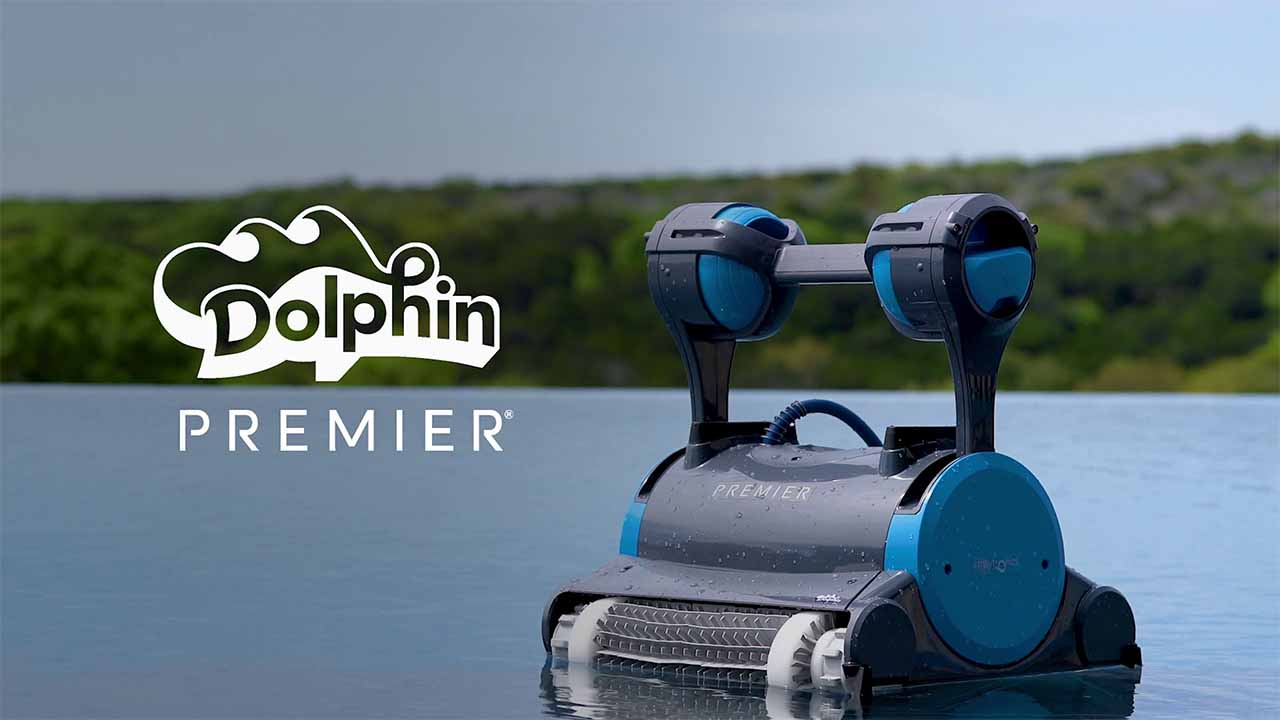
Nothing here is rated for 60 ft, so we rank by what stretches furthest. The Premier's 3-hour cycle is the longest of the three picks, which matters when the floor is larger than the cycle was planned around. Its cable is 55 ft long and turns on a 360-degree anti-tangle swivel. A long pool also means a long deck and more debris blowing in, so the Multi-Media filters earn their keep: the oversized leaf bag for heavy days, NanoFilters for dust. The weekly timer is set on the power supply, handy for a unit parked at mid-pool.
Best for
Narrow 60 ft pools, around 20 ft wide or less, where the power supply can sit at the midpoint of a long side.
Keep in mind
Still rated to 50 ft. In a wide or deep 60 ft pool the cable will stop short of the far corners, and you will finish those by hand.
The Sigma has the same 55 ft swivel cable and the same 4,500 GPH as our first pick, driven by three commercial-grade ProLine motors and scrubbed by quad brushes. Its edge on a long pool is SmartNav 3.0 with an onboard gyroscope: a robot that tracks its heading has a better chance of working a long, repetitive floor in orderly lanes. The 2.5-hour cycle is the second longest. The myDolphin Plus app schedules by day and time and sends a filter alert, useful when a big pool fills the cartridges sooner than you expect.
Best for
Owners of long, narrow pools who want app scheduling and filter alerts and accept the 50 ft rating.
Keep in mind
It is the heaviest robot at 24.6 lb and the highest-priced, and smarter navigation does not add a single foot of cable.
No robot on this page with a 50 ft rating and a 55 ft anti-tangle swivel cable costs less than the Quantum, so it is the least expensive way to try the midpoint setup. The XXL MaxBin basket, with more than 400 sq in of filter surface, holds plenty between empties, and standard and NanoFilter panels are both included. It ranks third for one reason: the 2-hour cycle is the shortest of the three, and an oversize pool is where short cycles show. If you clean in two halves, one cycle per half, that weakness shrinks.
Best for
Owners who plan to clean in two halves, or who want to test the workaround at the lowest cost.
Keep in mind
The 2-hour cycle is short for 1,200 square feet of floor, and the warranty runs 2 years.
How we ranked them: We matched filtration, brush system, coverage, debris capacity, automation, and warranty to this page's buying need. Pool fit carries more weight than the longest feature list.
Buying criteria
What Matters When the Pool Is Longer Than the Rating
01
How Far Past 50 ft You Are
The rating is the longest straight run a robot is built to cover. Sixty feet is 20 percent beyond it. Navigation and cycle time were planned around a shorter pool, so coverage at the two ends is the first thing to suffer, even when the cable can physically get there.
02
Cable Geometry From the Midpoint
From the middle of a 60 ft side, each end wall is 30 ft away. The far corners are farther: about 36 ft across a 20 ft wide pool and over 42 ft across a 30 ft wide one, before you add deep-end depth and the stretch of deck back to the power supply. Narrow pools work. Wide ones run out of cable.
03
A Swivel on a Cable at Full Stretch
A robot crossing 60 ft makes a lot of turns, and each turn can put a twist in the cable. A swivel lets those twists spin out instead of coiling up and shortening the useful reach. All three picks have one, which is one more reason the compact 33 ft robots are not on this list.
04
Cycle Time for the Extra Floor
A 20 x 60 pool has 1,200 square feet of floor, a fifth more than a 20 x 50, the largest pool of that width these robots are rated for. Cycle length is fixed by the model, so the 3-hour and 2.5-hour cycles simply have more time to spend on the extra area.
Side-by-side
How the Three 50 ft Robots Compare
Only the models recommended on this page, and only the specs that decide this choice.
The idea is to cut the longest cable run in half. Instead of placing the power supply at one end, where the far wall is 60 ft away, you put it at the middle of a long side.
Measure from that spot to the farthest corner across the water, then add the deepest depth and the distance from the water's edge back to the power supply. If the total is under 55 ft with a few feet spare, the cable can reach.
Lower the robot in at the midpoint, not at an end, so it starts with slack in both directions.
Watch one full cycle. If the cable goes taut before the robot touches an end wall, that end is outside its reach.
Cleaning a 60-Foot Pool in Two Halves
The second approach treats the pool as two overlapping zones. Set the power supply a quarter of the way along the long side and run a cycle, then move it to the three-quarter point and run another. The robot does not know where a half ends, so it will wander past the middle until the cable checks it, and the center gets cleaned twice.
The cost is your time: two cycles, two setups and a robot to carry between them. A timer cannot do this for you, because someone has to move the power supply. A workable rhythm is one half per day.
When a Commercial Robot Is the Right Answer
Skip the workaround if the pool is much wider than 20 ft, if the deep end uses up cable you need for length, if it serves guests or members instead of one household, or if nobody is around to check on the robot. Commercial-class robots are built for this, with far longer cables, larger filter capacity and duty ratings for daily use. We would sooner point you to the right class of machine than sell you a robot that leaves ten feet of floor dirty. Call with your length, width and depth.
If You Run a 50 ft Robot in a 60 ft Pool
Do the cable math on paper first: corner distance from the midpoint, plus depth, plus deck. Order only if it comes in under 55 ft.
Uncoil the whole cable and lay it straight along the deck before each run so the swivel starts with no twists to clear.
After the cycle, brush both end walls and all four corners toward the middle so the next cycle can collect what was out of reach.
Buy with confidence
Protection beyond the product.
Buying through an authorized dealer gives you a clear warranty and support path. When purchased here, every featured cleaner also includes free shipping, a 30-day in-pool trial, and $0 restocking on returns.
Is any residential robotic pool cleaner rated for a 60-foot pool?
Not among the robots in these guides. The Premier, Sigma and Quantum are each rated for pools up to 50 ft, and the two compact models stop at 33 ft. A pool with a 60 ft run belongs to commercial-class robots, which carry longer cables and are built for larger floors.
How far can a 55 ft cable really reach?
Less than 55 ft across the water. Part of the cable lies on the deck between the power supply and the pool edge, and part hangs down to the floor at the deepest point. What is left is the horizontal reach. With an 8 ft deep end and the power supply set back from the edge, plan on roughly 40 ft.
Could I run two robots, one in each half?
You can. Run them at different times so the cables cannot cross and tangle, and place each power supply near the middle of its own half. It doubles the purchase and the filter cleaning, so price a single commercial-class robot before you commit to two residential ones.
Is a 60-foot lap pool easier than a 60-foot family pool?
Yes, for cable reach. A lap pool is narrow and usually a constant, modest depth, so from the midpoint the far corners are barely farther than the end walls and little cable is lost to depth. It is still beyond the 50 ft rating, so judge the result by watching the ends over the first few cycles.
By Pool Size
Keep Exploring
Compare another buying need or open the complete guide library.
At 60 ft, the rated answer is a commercial-class robot, and that is what we advise for wide, deep or shared pools. If yours is a narrow backyard pool and you accept a workaround, put the power supply at the midpoint, do the cable math first and choose the Premier for cycle time or the Sigma for navigation. Take the Quantum if you will clean in halves. Whichever you choose, plan on brushing the ends yourself.