Try it in your pool for 30 days. Exchange it for another Dolphin for free, or return it with no restocking fee.
Your bag is empty.
By Pool Length
Robotic Pool Cleaners for 65-Foot Pools: A Straight Answer
At 65 feet you are 15 ft beyond any residential rating. This guide explains the one workaround we think is fair to describe, and where it stops working.
Our shortlist focuses on Dolphin models available with authorized-dealer support. The buying criteria below also give you a useful framework for evaluating alternatives from any brand.
Before you buy
None of the robots here is the right tool for a 65-foot pool. Each is rated to 50 ft at most, 15 ft short. The correct machine is a commercial-class robot with a cable of 100 ft or more. The picks below are for supervised two-zone cleaning only, and they will not cover the whole pool in one run.
If you are searching for the best robotic pool cleaner for a 65-foot pool, the direct answer is a commercial machine, and we would be doing you no favor by saying otherwise. Sixty-five feet is 15 ft past the highest rating of any robot in these guides. Many pools this length are 20-meter lap pools, which measure about 65.6 ft.
At this length even a power supply placed at mid-pool leaves the cable at its limit in a narrow pool and short of the corners in a wide one. What remains is zone cleaning: run the robot in one half, move the power supply, run it in the other. It needs a swivel cable and someone watching, and it is what the rankings below assume.
$0 restockingNo-cost exchanges
Free shippingNationwide
Up to 3 yearsPremier & Sigma
30-day trialIn your own pool
Expert shortlist
Residential Robots for Two-Zone Cleaning, in Order
Ranked for this job, with the reason each model earned its place and the point where it stops being the right choice.
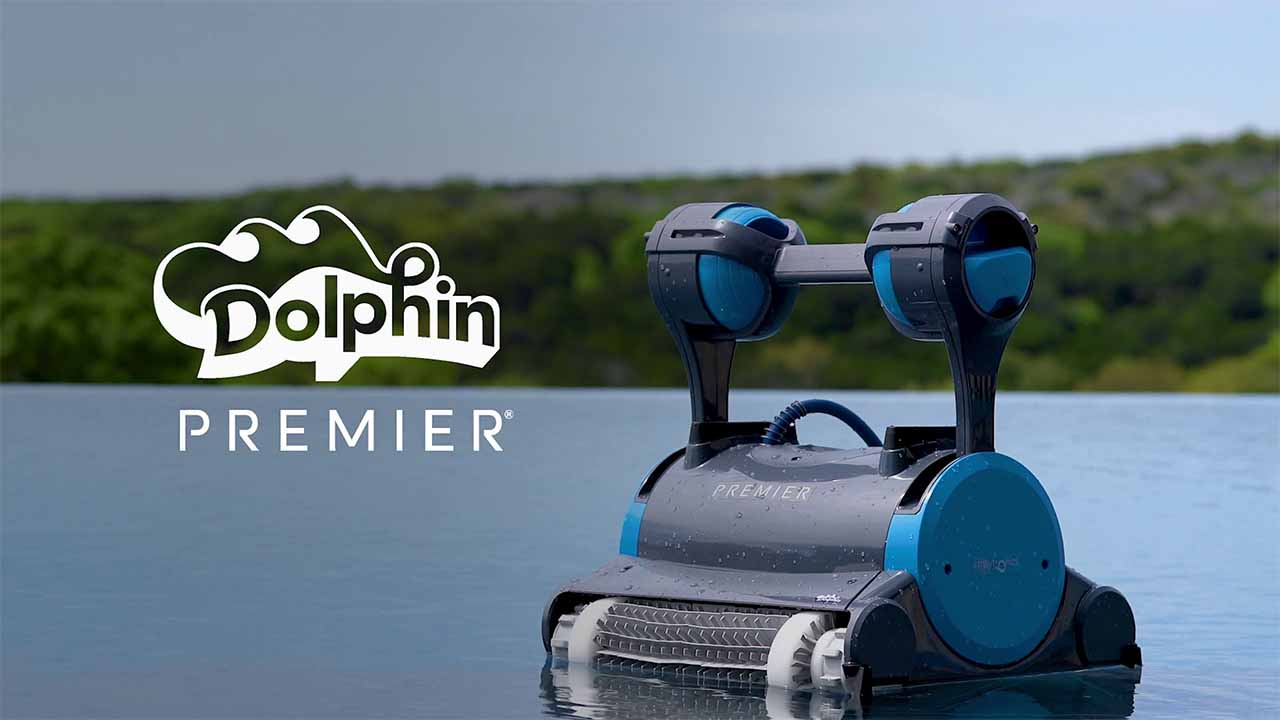
For a job done in two supervised runs, the Premier offers the most cleaning per run. Its 3-hour cycle gives each zone of roughly 33 ft generous time, a useful margin when a zone's edge is set by the cable instead of a wall. The 55 ft cable with a 360-degree anti-tangle swivel copes with being re-laid twice a session, and the top-load filters lift out without tools while the robot is on the deck between zones. The Multi-Media set lets you run the leaf bag in the half under the trees and NanoFilters in the half that only collects dust.
Best for
Private 65 ft pools where an owner or caretaker can supervise two cycles and wants the longest clean per zone.
Keep in mind
Two 3-hour cycles take most of a day, and the pool still is not covered in a single run.
The Sigma matches the first pick on what zone cleaning depends on, a 55 ft cable with a 360-degree swivel and 4,500 GPH of flow, and adds a third motor and quad scrubbing brushes. SmartNav 3.0 with its gyroscope helps the robot keep an orderly pattern in a zone that has only three real walls. Through myDolphin Plus, over Wi-Fi or Bluetooth, you get an alert when the filters need emptying, so you can keep an eye on a run from a chair instead of standing at the power supply. The cycle is 2.5 hours and the warranty is 3 years.
Best for
Owners who want to follow each zone run from a phone and value navigation that holds a pattern without four walls.
Keep in mind
At 24.6 lb it is the heaviest to haul out and carry between zones, and none of the three costs more.
The Quantum is third on cycle time and first on handling. At 18.3 lb it is the lightest of the 50 ft robots, a real consideration when the routine includes lifting a wet robot out and walking it down the deck. Its 2-hour cycle means both zones can be finished in about four hours of run time. The XXL MaxBin basket opens from the top with one click, standard and NanoFilter panels are included, and the 55 ft cable has an anti-tangle swivel. It is also the 50 ft robot with the lowest price.
Best for
Owners who want the easiest robot to move and the quickest two-zone session, or a lower-cost stopgap.
Keep in mind
The shortest cycle of the three leaves the least margin per zone, and the warranty is 2 years.
How we ranked them: We matched filtration, brush system, coverage, debris capacity, automation, and warranty to this page's buying need. Pool fit carries more weight than the longest feature list.
Buying criteria
What to Weigh Before Running a Residential Robot at 65 Feet
01
Fifteen Feet Is Not a Rounding Error
A 50 ft rating against a 65 ft pool means 30 percent more length than the robot was designed around. At that gap you are no longer stretching a rating. You are using the robot on part of a pool at a time, and should judge it that way.
02
A Cable That Tolerates Being Moved
Zone cleaning means coiling, carrying and re-laying the cable for every run, and handling adds twists. A swivel sheds them. All three picks carry 55 ft of cable with a swivel; the two compact Dolphins, the Cayman and the Escape, have neither the swivel nor the rating for this.
03
Weight You Lift Twice
The robot comes out of the water and goes back in for each zone, and it is heavier wet than dry. Dry weights here are 18.3 lb, 20.3 lb and 24.6 lb. None includes a caddy, so think about how it travels along 65 ft of deck, and whether a caddy would help.
04
Someone Has to Be There
A timer or app schedule assumes the robot stays in one place and can reach everything from it. Zone cleaning breaks that assumption. Plan on a person present to start each run, move the power supply and check that the cable is never pulled tight.
Side-by-side
The Three Longest-Reach Robots in These Guides
Only the models recommended on this page, and only the specs that decide this choice.
Split the pool across its length into two zones of about 33 ft. Set the power supply beside the middle of the first zone, lower the robot in there and let it run. When the cycle ends, bring the robot to the wall, lift it out by the handle, then carry robot and power supply to the middle of the second zone and repeat.
The robot has no idea a zone exists. It will cross the center line and keep going until the cable stops it, so the middle of the pool is cleaned twice and each end once. That is why a person needs to be there: to see that the cable is not dragged tight around a ladder or rail, and to stop the run if it is.
What Still Gets Missed
Two zones are better than a dirty far end, but they are not full coverage. Expect these gaps:
Time lost over the line. A robot may spend a good part of a cycle on the wrong side of center, so its own zone gets less attention than the clock suggests.
The end walls and their corners, which get a single pass at best. Brush them toward the middle before you start.
Steps, benches and shallow ledges, which most robots do not clean in any pool.
Whatever falls in between sessions. Without a daily schedule, the skimmer and a leaf net carry the load.
What a Commercial-Class Robot Changes
A robot built for long pools carries a cable of 100 ft or more, so it covers 65 ft from one power supply position with no moving and no supervision. It has the filter capacity for that much floor, usually comes with a caddy because it is too heavy to carry, and is rated for the daily duty a club, hotel or community pool demands. It costs considerably more than anything on this page. If your pool is open to members or guests, or cleaned by staff, that is the machine to budget for, and we are glad to talk the choice through by phone.
Running a Supervised Two-Zone Clean
Mark the center of each zone on the deck with tape so the power supply goes to the same two spots every time.
Uncoil the cable fully at each position. A half-coiled cable shortens reach and hands the swivel extra twists to clear.
Start each run by hand and leave the weekly timer off, since the robot will not be in the same zone tomorrow.
Rinse the filter between zones if the first half was dirty, then store the robot out of the water and out of direct sun once both are done.
Buy with confidence
Protection beyond the product.
Buying through an authorized dealer gives you a clear warranty and support path. When purchased here, every featured cleaner also includes free shipping, a 30-day in-pool trial, and $0 restocking on returns.
Is a 20-meter lap pool the same as a 65-foot pool when sizing a robot?
Yes. Twenty meters is about 65.6 ft, so a 20-meter pool sits in the same place: 15 ft past the 50 ft rating. Being narrow and shallow helps the cable, since less of it is spent on width and depth, but the rating does not change. Treat it as a commercial-robot pool or a two-zone job.
Can a robotic pool cleaner for a 65-foot pool run on a timer?
Not a residential one used in zones. A schedule only makes sense when the robot and power supply stay put and the cable reaches the whole pool. Here the power supply moves between runs, so each cycle is started by hand. A commercial-class robot with enough cable is what makes scheduled, unattended cleaning possible at this length.
How long does a two-zone clean take?
Two full cycles plus the changeover. That is about four hours of run time with the Quantum, five with the Sigma and six with the Premier, plus however long it takes you to move the robot and power supply.
How long is the cable on a commercial pool robot?
Commercial-class robots for long pools typically carry 100 ft of cable or more, against 55 ft on the longest-cabled robots on this page. That extra cable is what lets one machine cover a 65 ft pool from a single position. The exact figure varies by model, so match it to your pool's length, width and depth before you buy.
By Pool Size
Keep Exploring
Compare another buying need or open the complete guide library.
Budget for a commercial-class robot if the pool is shared, staffed or expected to be cleaned with nobody present. If it is a private pool and you are willing to supervise two zones, the Premier gives the most cleaning per zone, the Sigma lets you follow it from your phone and the Quantum is the easiest to carry. None of the three turns a 65 ft pool into a one-button job, and we would rather you hear that from us before the box arrives.