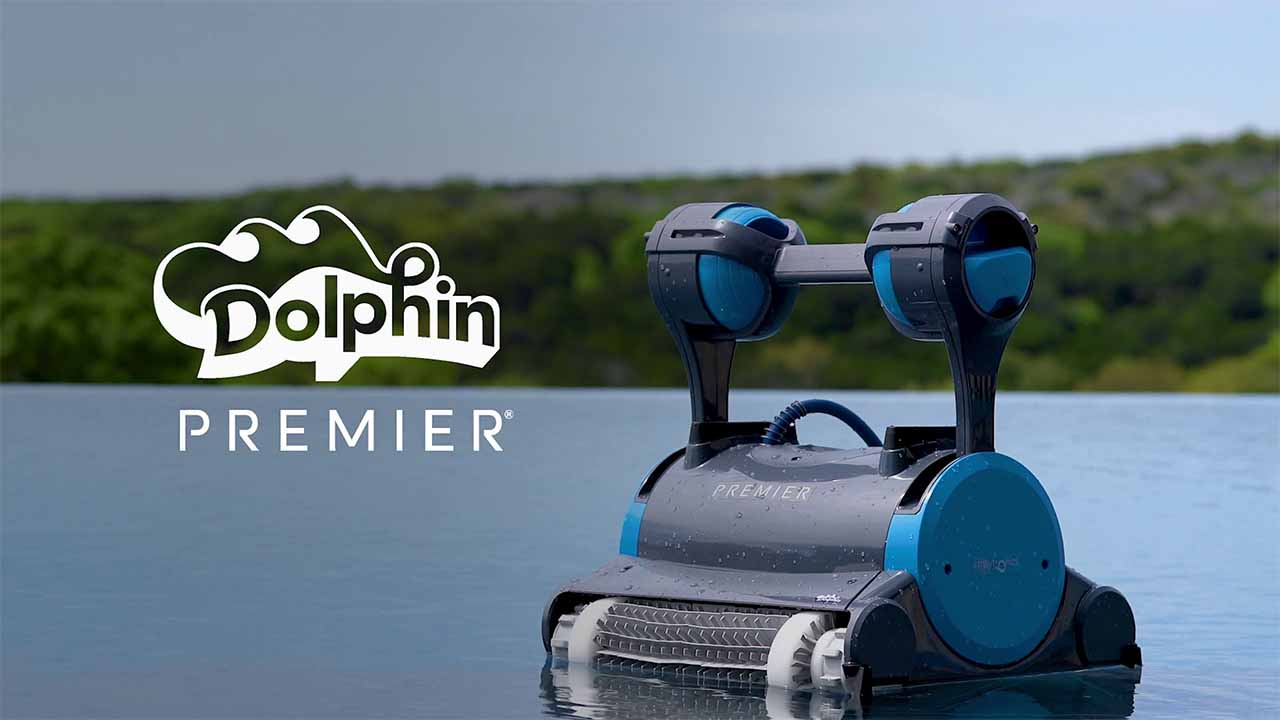
Our shortlist focuses on Dolphin models available with authorized-dealer support. The buying criteria below also give you a useful framework for evaluating alternatives from any brand.
Stairs are where robot marketing and pool reality part company. A robot holds itself to a surface with suction, and suction needs water above the machine. On the lower steps there is plenty. On the top step or two there usually is not. The best robotic pool cleaner for stairs, then, is not one that cleans every tread, because none does. It is the one published to cover stairs, bought with realistic expectations.
This page ranks four robots by how much of a staircase they are described as cleaning, then by what they bring to the rest of the pool. If you came looking for the best robotic pool cleaner for pool steps and nothing else, the answer is short. If steps are one concern among several, the order takes more judgment.
$0 restockingNo-cost exchanges
Free shippingNationwide
Up to 3 yearsPremier & Sigma
30-day trialIn your own pool
Expert shortlist
Robots for Pool Stairs, Ranked
Ranked for this job, with the reason each model earned its place and the point where it stops being the right choice.
The Quantum leads for a plain reason: of the four robots ranked here, it is the only one whose published coverage includes stairs. The same list covers sun shelves and Baja ledges, the other shallow, flat surfaces that most robots treat as walls. Its dual HyperBrush spins at twice the speed of standard brushes, which helps on a tread.
It still obeys the water rule, so the top step needs a brush. Beyond the stairs it is a complete 50 ft robot with a 55 ft swivel cable and SmartNav 2.0 that senses ladders and drains.
Best for
In-ground pools up to 50 ft where steps, a sun shelf or a Baja ledge are a real share of the pool.
Keep in mind
The top step is still yours. Its warranty stops at two years; the Premier and Sigma carry three.
The Premier lists steps among the obstacles it handles. It climbs onto the lower treads where there is water enough, scrubs them with its dual brushes, and works around the rest. It does not carry the Quantum's stair listing, which is why it is second on a page about stairs.
It is not lower because stairs are rarely a pool's only problem. Whatever comes off the steps lands on the floor, and Multi-Media filtration gives the Premier a leaf bag for what blows onto wide entry steps and NanoFilters for the grit that collects on treads.
Best for
Pools where steps are one concern among several: leaves, fine dust, a long run, a tile line.
Keep in mind
Stairs are not named in its published coverage. Expect lower treads only, and brush the rest.
The Sigma lists steps as an obstacle it handles and does not claim stairs in its coverage. Where it differs is in what it brings to the treads it does reach: quad scrubbing brushes instead of two, and SmartNav 3.0 with an onboard gyroscope, which helps it resume its pattern after a staircase has turned it.
It is third because none of that changes the basic limit, and it is the highest-priced robot on the page. It also weighs the most of the four, 24.6 lb, when you lift it out.
Best for
Owners already drawn to the Sigma for navigation and app control who want to know how it treats steps.
Keep in mind
Highest price here for no additional stair coverage. Buy it for the rest of the pool, not for the steps.
Where the pool is no longer than 33 ft, the Cayman treats steps the way the two larger runners-up do: it lists them as an obstacle, climbs onto the lower treads where the water allows, and works around the rest. HyperGrip tracks give it purchase on the risers, and at 14.6 lb it is the lightest of the four.
Two limits matter here. The tile band beside and above the steps is left to you. And the 50 ft cable has no swivel, so a handrail post is one more thing for it to catch.
Best for
Pools up to 33 ft with corner or wedding-cake steps, where brushing the top tread is no hardship.
Keep in mind
Stairs are absent from its published coverage, and so is the tile line. The timer runs every day only.
How we ranked them: We matched filtration, brush system, coverage, debris capacity, automation, and warranty to this page's buying need. Pool fit carries more weight than the longest feature list.
Buying criteria
What Decides How Much of Your Stairs Get Cleaned
01
Water over the robot
A robot climbs onto a step only while there is enough water above it to keep suction. That is why the bottom treads get cleaned and the top one or two usually do not. Look up the minimum depth in your model's manual.
02
What the published coverage says
The Quantum's coverage reads floor, walls, waterline, sun shelves, Baja ledges and stairs. The Premier, Sigma and Cayman list steps among the obstacles they handle, which means working around them and partly onto them, not a promise of every tread.
03
The shape of the steps
Wide, deep treads give a robot room to sit flat. Corner steps and broad wedding-cake steps are the easiest. Narrow ladder-style steps, with short treads squeezed between walls, are the hardest, because the robot cannot get its whole body onto one.
04
Where the dirt goes
Steps shed their debris downhill. What you brush off, or what swimmers kick off, ends up on the floor at the foot of the stairs, where every robot here collects it. A good floor cleaner plus a brush covers most of a staircase.
Side-by-side
Stair Coverage and Specs Compared
Only the models recommended on this page, and only the specs that decide this choice.
Step design changes the result more than the choice of robot does. Use the table to set expectations for your own stairs before you compare robots. The rule underneath is always the same: the robot cleans where it can sit flat with water above it, and it leaves what is too shallow or too narrow.
Where the table says to brush, brush toward the pool before the cycle, not after it, so the robot collects what comes down to the floor.
Step type
What to expect
What helps
Corner steps
Lower treads cleaned; top tread usually missed
Brush the top tread toward the pool
Wedding-cake steps
Wide, curved treads suit a robot; the top tier is too shallow
Brush the top tier before the cycle
Full-width entry steps
Lower treads covered along the whole wall
Consider the Quantum if these are a large area
Narrow ladder-style steps
Robot cannot sit on the short treads; mostly skipped
Brush by hand and let the robot collect from the floor
The Top-Step Routine
The top step collects the most and gets cleaned the least. It is where people stand, where sunscreen and grit come off feet, and where the water is shallowest. The fix is a habit. Before a scheduled cycle, sweep the top step or two toward the pool with a pool brush, then run the brush down the risers. The debris slides to the lower treads and the floor, where the robot is working anyway. If the timer runs the robot early in the morning, brush the evening before.
Handrails, Ladders and Getting Stuck
Steps bring hardware with them. A handrail post set into a tread is something for a cable to loop around, and a ladder beside the stairs is another. The Quantum's SmartNav 2.0 is described as sensing ladders and drains, and the swivel cables on the Quantum, Premier and Sigma shed the twists that hardware causes.
If a robot repeatedly stops on your steps, look for three things: a cable caught on the rail, a robot wedged between a narrow tread and the wall, or a filter so full that suction and grip have dropped.
Tips for Cleaner Pool Steps With a Robot
Brush the top two treads toward the pool before the cycle, never after.
Hold the water at its usual level. A low pool turns a cleanable middle step into one that is too shallow.
Route the cable so it enters the pool away from the handrail, which keeps it from looping the post.
Watch one full cycle from the deck and note the highest tread the robot reaches. That tells you exactly how much to brush.
Buy with confidence
Protection beyond the product.
Buying through an authorized dealer gives you a clear warranty and support path. When purchased here, every featured cleaner also includes free shipping, a 30-day in-pool trial, and $0 restocking on returns.
Some do, partly. The Quantum's published coverage includes stairs, and the Premier, Sigma and Cayman list steps as obstacles they handle. All of them need water above the robot to hold suction, so the lower treads are cleaned and the top one or two are usually left. The best robotic pool cleaner for stairs is bound by the same rule.
Why does my robot skip the top step?
Because the water there is too shallow. A robot grips by suction, and with only a few inches of water over it the suction breaks and it backs off. This is normal for every robot on this page and is not a fault. Brush that step toward the pool before the cycle.
Will a robot clean wedding-cake steps?
Better than most step styles. The treads are wide and gently curved, so a robot can sit flat on them. The lower tiers get cleaned; the top tier is normally too shallow. If wedding-cake steps take up a lot of your pool, the Quantum is the pick.
Can a robot get stuck on pool steps?
It can, most often on narrow steps where the robot wedges between a tread and a wall, or when the cable catches a handrail. A swivel cable and a clean filter reduce the chances. If it keeps happening in the same spot, send us the step dimensions and we will advise.
By Steps, Ledges & Slopes
Keep Exploring
Compare another buying need or open the complete guide library.
If steps, a sun shelf or a Baja ledge are a large part of your pool, buy the Quantum: it is the one whose published coverage names them. If steps are a small part of a pool with leaves, dust or a long run, buy the Premier and brush the top tread. The Sigma earns its price on navigation, not stairs. The Cayman is the pick at 33 ft or under. No robot here reliably cleans the top step.