Try it in your pool for 30 days. Exchange it for another Dolphin for free, or return it with no restocking fee.
Your bag is empty.
By Steps, Ledges & Slopes
Robotic Pool Cleaners for Shallow Water: Shallow Pools, Ledges and Steps
Shallow water means two things to two kinds of owner, a pool that is 3 to 4 feet deep throughout or a feature under 18 inches, and each has its own answer.
Our shortlist focuses on Dolphin models available with authorized-dealer support. The buying criteria below also give you a useful framework for evaluating alternatives from any brand.
Search for the best robotic pool cleaner for shallow water and you could mean either of two things. One owner has a pool that never gets deeper than 3 or 4 feet: an above-ground pool, a sport pool, a play pool. Another has an ordinary pool with a shallow feature in it, a tanning ledge or a wide run of steps.
The answers differ. In a pool that is shallow end to end, a robot has all the water it needs, and the decision comes down to pool type, length and budget. On a ledge or step under about 18 inches, the question is whether the robot was built to work there at all, and the best robotic pool cleaner for shallow ledges is a one-robot list. We rank four robots for both readers, and explain why the Dolphin Premier comes fourth.
$0 restockingNo-cost exchanges
Free shippingNationwide
Up to 3 yearsPremier & Sigma
30-day trialIn your own pool
Expert shortlist
Four Robots Ranked for Shallow Water
Ranked for this job, with the reason each model earned its place and the point where it stops being the right choice.
The Quantum leads because it answers the harder of the two shallow-water questions. Its published coverage lists sun shelves, Baja ledges and stairs on top of floor, walls and waterline, and no other robot in this guide lists any of them.
It suits the shallow in-ground pool as well. A 50 ft rating covers long sport pools, the cycle is 2 hours, and the XXL MaxBin basket comes with both standard and NanoFilter panels. At 18.3 lb it is the lightest of the 50 ft robots compared here.
Best for
In-ground pools with a shelf or steps to clean, and shallow sport pools up to 50 ft.
Keep in mind
It is an in-ground robot, so it is not the answer for an above-ground pool, and a very shallow shelf may still be missed.
In a pool that is shallow throughout, depth stops being the issue and fit takes over. The Cayman is published for both in-ground and above-ground pools up to 33 ft, and its 50 ft cable leaves room to set the power supply well back from the water. It cleans floor and walls in 2 hours with a HyperBrush spinning at twice the speed of standard Dolphin brushes and a MaxBin basket that empties through a top hatch.
At 14.6 lb it lifts easily out of waist-deep water, and its timer runs a cycle every day.
Best for
Above-ground pools and shallow in-ground pools up to 33 ft where a daily timer is welcome.
Keep in mind
Floor and walls only, with no waterline scrubbing, and the cable has no swivel, so lay it out straight before each run.
The Escape is built around the most common shallow pool there is: the above-ground round or oval. It is the lightest robot in this guide at 14.2 lb and the lowest-priced pick here, and its 1.5-hour cycle matches a small floor and short walls. It is rated for pools up to 33 ft.
It ranks third on reach and convenience. The cable is 40 ft, so on rounds larger than about 24 ft, measure the run from where the power supply will sit before choosing it; the Cayman's 50 ft cable is the safer choice when that run is long. Scheduling is not standard; an Automation Timer power supply is an optional upgrade.
Best for
Smaller above-ground pools where a short cycle, a light lift and the lowest price matter most.
Keep in mind
Shortest cable of the four at 40 ft with no swivel, floor and walls only, and scheduling costs extra.
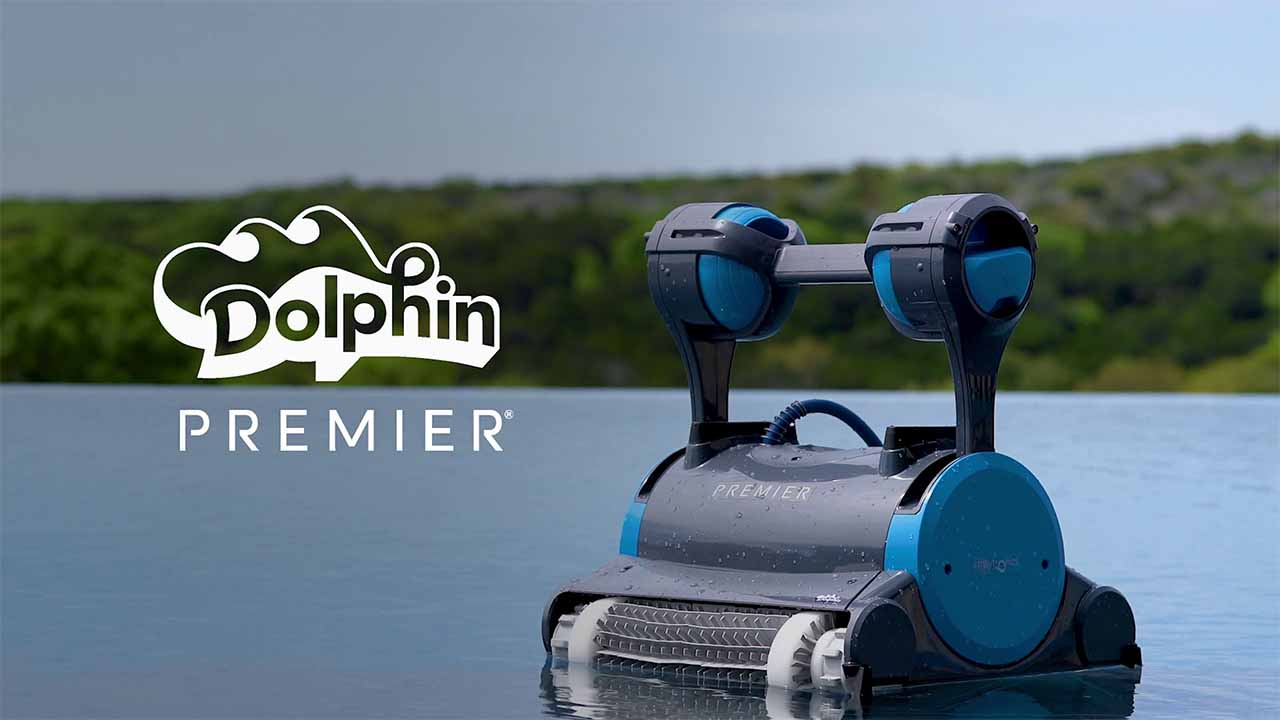
The Premier sits fourth, and the reason is fit, not ability. It has no published shelf or stair coverage, and it is an in-ground robot, so it is not for the above-ground pools that make up most of the all-shallow group. Where it belongs is the shallow in-ground sport pool: often 40 ft or longer, open to wind and trees, with a tile line. There its 50 ft rating, 3-hour cycle, waterline cleaning and a Multi-Media filter set that includes an oversized leaf bag, NanoFilters and standard fine filters are the right tools.
Best for
In-ground sport and play pools over 33 ft, especially with leaves, sand or a tiled waterline.
Keep in mind
Not for above-ground pools and not a ledge cleaner. In a small shallow pool its range goes largely unused.
How we ranked them: We matched filtration, brush system, coverage, debris capacity, automation, and warranty to this page's buying need. Pool fit carries more weight than the longest feature list.
Buying criteria
What Shallow Water Changes for a Robot
01
Which kind of shallow you have
A pool that is 3 to 4 feet deep everywhere is ordinary territory for a robot. A feature under about 18 inches is not. Settle which one you are shopping for first: the former is a sizing question, the latter a coverage question.
02
Staying fully submerged
A robot pulls water through its filter both to clean and to hold itself against the surface. If the body breaks the surface it draws air, loses suction and may stop. No minimum depth figure for a Dolphin appears on this page; the manual for your model has it.
03
Pool type and length
Most all-shallow pools are above-ground, which narrows the field to robots published for above-ground use and rated to 33 ft. Shallow in-ground sport pools are often long, and past 33 ft you need a 50 ft robot.
04
Short walls
In 4 feet of water a wall climb is brief, so a robot spends more of its cycle on the floor and shorter cycles are enough. Waterline scrubbing matters more in a tiled in-ground sport pool than in a vinyl above-ground one.
Side-by-side
Shallow-Water Picks Compared
Only the models recommended on this page, and only the specs that decide this choice.
Most confusion on this topic clears once you place your water in one of the rows below. The depths are typical ranges for each kind of pool, not robot specifications, so measure your own. The first two rows are whole pools where a robot stays underwater everywhere and the choice is about type and length. The next two are features inside a deeper pool, where coverage decides.
The Sigma, which we also sell, is at home in any shallow in-ground pool. It is off this shortlist only because its gyroscope navigation and quad brushes are not shallow-water advantages, and it is the highest-priced of the five.
Your shallow water
Typical depth
What to choose
Above-ground pool
About 3.5 to 4.5 ft
Cayman or Escape, by size and cable run
In-ground sport or play pool
3 to 5 ft
Cayman to 33 ft; Quantum or Premier beyond
Tanning ledge or sun shelf
6 to 18 in
Quantum
Entry steps
Varies by tread
Quantum lists stairs; brush the top step
Wading pool or splash pad
Inches
No robot; hose and brush
How to Check a Shallow Spot Before You Rely on a Robot
Lower the robot into the shallowest area you expect it to clean and look at it from the side. The whole body should sit below the surface with water to spare, including on a slope where one end rides higher. Then think about the level you actually keep: evaporation and splash-out can take an inch or two off a small pool in a hot week.
In above-ground pools, look at the floor too. Vinyl on a sand base develops dips and ridges, and a robot crossing a ridge sits higher in the water than the depth suggests. Where a spot fails the check, brush that area toward deeper water before each cycle.
Setting Up a Robot in a Shallow Pool
Submerge the robot and rock it gently until the bubbles stop before starting it. A buoyant robot has less depth to settle into in shallow water.
Top the pool up to its normal level before a cycle, since an inch of evaporation is a real share of what covers a step.
Lay the cable out straight on the deck before each run with the Cayman or Escape, since neither has a swivel.
Favor frequency over length. A shallow pool warms quickly and shows dirt sooner, so several short cycles a week serve it better than one long one.
Buy with confidence
Protection beyond the product.
Buying through an authorized dealer gives you a clear warranty and support path. When purchased here, every featured cleaner also includes free shipping, a 30-day in-pool trial, and $0 restocking on returns.
Will a robotic pool cleaner work in 3 feet of water?
In a pool that is 3 feet deep across the floor, yes. That is normal working water for the robots on this page, provided the robot stays fully submerged for the whole cycle. The limits appear on features much shallower than that, such as top steps and ledges. For the exact figure for a given Dolphin, check its manual.
What happens if a robot rises out of the water during a cycle?
It draws air in place of water, which costs it suction and grip, and it may stall or stop. Switch it off, set it fully under again, let the air bubble out, and restart. If it keeps happening at the same place, that place is too shallow or the water level has dropped.
Can I use a pool robot in a kiddie pool or wading pool?
No. Wading pools, splash pads and fountain basins do not hold enough water to keep a pool robot submerged, and manuals warn against running one out of the water. These are jobs for a hose, a brush and a drain-down.
Is the best robotic pool cleaner for shallow water different for an above-ground pool?
Yes. An above-ground pool needs a robot published for above-ground use, which among these picks means the Cayman or the Escape, both rated to 33 ft and both cleaning floor and walls. The Quantum and Premier are in-ground robots and are not the choice there, however shallow the pool is.
By Steps, Ledges & Slopes
Keep Exploring
Compare another buying need or open the complete guide library.
Sort yourself first, then pick. A shelf, ledge or steps inside a deeper pool: the Quantum, the only one that lists them. An above-ground pool, or a shallow in-ground pool up to 33 ft: the Cayman, or the Escape when the pool is small and the cable run is short. A shallow in-ground pool longer than 33 ft: the Quantum, or the Premier when leaves and a tile line are part of the job. Water too thin to cover a robot belongs to a brush.