Try it in your pool for 30 days. Exchange it for another Dolphin for free, or return it with no restocking fee.
Your bag is empty.
By Steps, Ledges & Slopes
Robotic Pool Cleaners for Uneven Floors: Dips, Wrinkles and Patched Plaster
No robot levels a floor, but a tracked robot of the right weight, on a cable that does not tug, will clean a lumpy one, and this guide matches robot to floor.
Our shortlist focuses on Dolphin models available with authorized-dealer support. The buying criteria below also give you a useful framework for evaluating alternatives from any brand.
Pool floors are flatter on paper than in the water. A vinyl in-ground pool settles, or groundwater washes out a patch of the base and leaves a hollow. An above-ground pool on sand collects heel prints its first summer. Liners wrinkle. Plaster gets patched proud of the surface around it, or heaves along a crack. If you are after the best robotic pool cleaner for uneven floors, you have at least one of these and want to know whether a robot will cope.
Mostly it will. Every robot on this page drives on tracks, and tracks span irregularities that stop wheels. The differences lie in weight, in recovery when the robot is tipped, and in how the cable behaves. There are also things no robot does, and we name them. The Dolphin Quantum completes the in-ground picks.
$0 restockingNo-cost exchanges
Free shippingNationwide
Up to 3 yearsPremier & Sigma
30-day trialIn your own pool
Expert shortlist
How Four Tracked Robots Rank on Uneven Ground
Ranked for this job, with the reason each model earned its place and the point where it stops being the right choice.
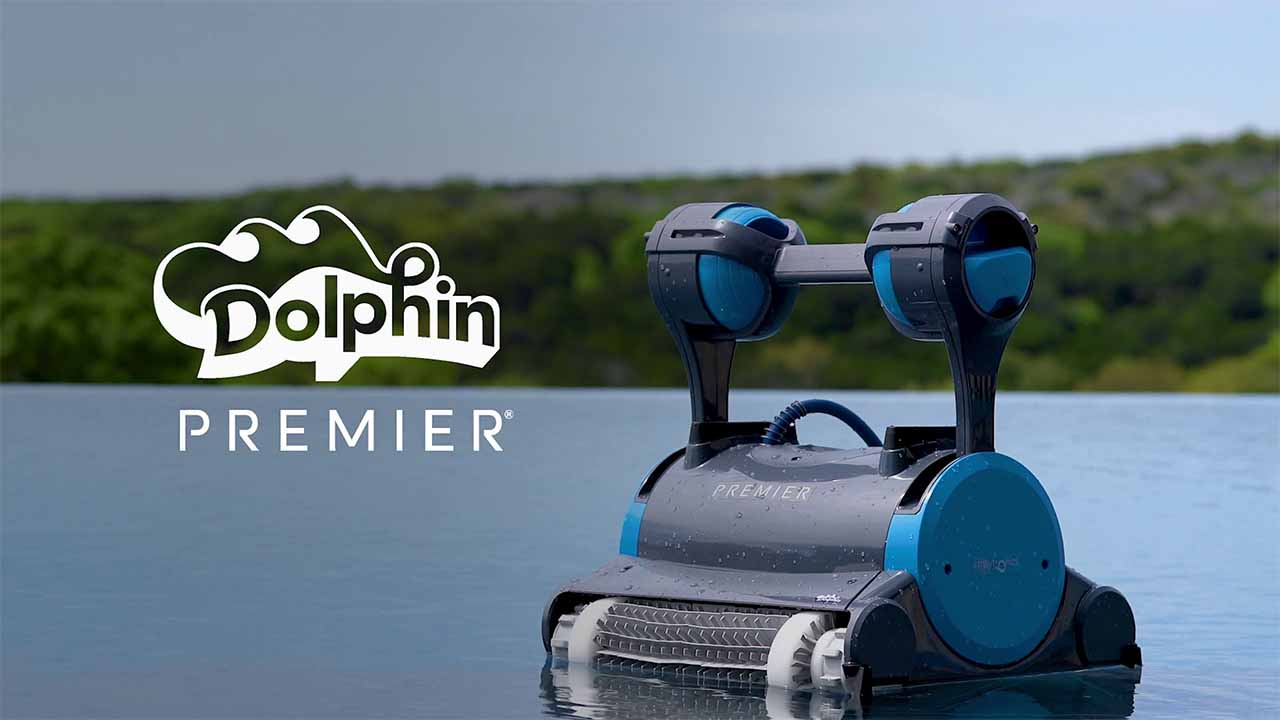
Most uneven in-ground floors are a patience problem: the robot gets over the rough patch, but debris in the hollows takes more than one visit. The Premier's 3-hour cycle is the longest of these picks, so low spots are crossed from several directions, and its dual scrubbing brushes sweep what lies in them toward the intake. HyperGrip tracks carry it across ridges and patches.
The 55 ft cable has a 360-degree swivel, which matters on rough ground: a twisted cable is what turns a brief tilt into a robot on its side.
Best for
In-ground vinyl, plaster and gunite pools up to 50 ft with settled areas, patches or a rough deep end.
Keep in mind
An in-ground robot at 20.3 lb, so not for soft-based above-ground pools. It cannot climb out of a deep, steep-sided hole.
The Sigma is the robot for floors bad enough to throw a cleaner off balance. SmartNav 3.0 uses an onboard gyroscope, so when a ridge or the lip of a hollow tips it, it senses the change and re-orients instead of carrying on at the wrong angle. Quad scrubbing brushes put more brush on the floor than any other pick here, which helps sweep out depressions.
It is second because it is the heaviest at 24.6 lb and the highest-priced, and most uneven floors are not severe enough to need that recovery.
Best for
Heaved or heavily patched plaster, multi-level floors and pools where other cleaners ended up on their side.
Keep in mind
Heaviest and highest-priced of the four. In-ground only, so not for an above-ground sand base.
The Quantum runs on HyperGrip continuous rubber tracks and weighs 18.3 lb, which is 2 lb under the Premier and more than 6 lb under the Sigma, a sensible match for an in-ground vinyl floor that has gone slightly soft or hollow. Its two HyperBrush rollers turn twice as fast as standard brushes and flick debris out of shallow depressions, and SmartNav 2.0 is described as sensing drains.
A 2-hour cycle means fewer repeat passes than the two robots above, so schedule it more often. An anti-tangle swivel keeps twist out of its 55 ft cable.
Best for
In-ground vinyl pools up to 50 ft with gentle settling, on a mid-range budget.
Keep in mind
A shorter cycle and a 2-year warranty. Scanning navigation only, so it is slower to recover from a tip than the Sigma.
Above-ground floors are where unevenness is most common and where robot weight matters. The Cayman weighs 14.6 lb and is published for above-ground and in-ground pools up to 33 ft, so it is kinder to a sand base than a 20 lb robot while riding footprints and gentle dips on the same HyperGrip tracks.
Its 50 ft cable has no swivel, and on a bumpy floor a twisted cable is the usual cause of a stall, so lay it out straight. The Escape, lighter still at 14.2 lb and the lowest-priced of the five Dolphins compared here, is also suitable for smaller above-ground pools within reach of its 40 ft cable.
Best for
Above-ground pools on sand or foam bases, and smaller in-ground pools up to 33 ft.
Keep in mind
Mind the cable, which has no swivel. A deep footprint can still stall it; smooth the worst ones when the pool is next drained.
How we ranked them: We matched filtration, brush system, coverage, debris capacity, automation, and warranty to this page's buying need. Pool fit carries more weight than the longest feature list.
Buying criteria
What an Uneven Floor Asks of a Robot
01
Tracks, not wheels
A track spreads the robot's weight along its full length, so it bridges a divot or rides over a ridge where a wheel would drop in or hang up. All of the Dolphins compared here use HyperGrip tracks, so none is ruled out on drive alone.
02
Weight on a soft base
On plaster or a firm in-ground liner, robot weight makes no difference to the floor. On an above-ground liner laid over sand, a lighter robot presses less into a base that already dents underfoot. These picks span 14.6 lb to 24.6 lb.
03
Recovery after a tip
A ridge or the lip of a hollow can tilt a robot or turn it off course. Scanning navigation sorts itself out over the cycle. A gyroscope senses the tilt as it happens and re-orients at once, which saves time on a badly broken floor.
04
Reach into the low spots
Debris collects in dips. A robot's intake sits at a set height, so in a hollow it is the brushes that sweep debris up to it. Active brushes and repeat passes count for more here than raw flow.
Side-by-side
Weight, Tracks and Navigation Compared
Only the models recommended on this page, and only the specs that decide this choice.
The word covers several different floors, and they do not behave alike under a robot. Walk yours in bare feet, or feel it with a pool brush, and note which of these you find. A floor with a few gentle hollows needs no special robot. A floor with one deep hole needs the hole dealt with.
Settled or washed-out vinyl base: broad, shallow hollows. Tracked robots cross them; debris gathers in them.
Sand-base footprints and divots in above-ground pools: small and sharp-edged. Light robots do best.
Liner wrinkles: small ones are ridden over. A tall fold can stop a robot.
Heaved, cracked or patched plaster: hard ridges. Tracks climb them; expect the odd change of course.
Old drain covers and fittings: fixed obstacles. Check that covers are secure and nothing is loose.
What a Robot Will Not Fix
A robot cleans the floor it is given. It will not level a base, press out a wrinkle or fill a divot. Two conditions deserve attention before you buy. A large wrinkle, tall enough to pinch between your fingers, should be worked out by a liner professional, since a robot can stall behind it. And a hollow with steep sides, deep enough that a robot would sit in it tilted, can hold a robot until the cycle ends.
Neither is common. Where they exist, expect to rescue the robot now and then, or fix the floor at the next liner change. If you cannot tell whether your floor is workable, ask a pool expert and describe it; a photo helps.
Getting a Clean Result on a Lumpy Floor
Brush debris out of the deepest hollows toward flatter ground before a cycle if the robot keeps leaving a little behind in them.
Keep the cable straight and free of twist. On rough ground a cable that pulls sideways is what tips a robot or parks it against a ridge.
Run more cycles, not longer ones. Low spots refill with fine debris between cleanings, and frequent passes keep it from showing.
Keep the filter clear. A full filter cuts water flow, and a robot with weak flow climbs out of a dip less readily.
Buy with confidence
Protection beyond the product.
Buying through an authorized dealer gives you a clear warranty and support path. When purchased here, every featured cleaner also includes free shipping, a 30-day in-pool trial, and $0 restocking on returns.
Will a robotic cleaner harm a vinyl liner that has wrinkles?
Vinyl liner is a published surface for every robot on this page, and their tracks and brushes are made to run on it. Small wrinkles are ridden over. The concern is a large fold: a robot can stall against it, and we would not keep running any cleaner into one. Have big wrinkles worked out first.
Can a robot get caught in a footprint dent in an above-ground pool?
In a shallow one, no: the tracks bridge it. In a deep, sharp-edged one it can sit tilted and stall until you move it. Light robots are less prone to this and gentler on the base, which is why the Cayman is our above-ground pick here.
Do tracks really cope with bumps better than wheels?
Yes, for a simple mechanical reason. A wheel touches the floor at one point and drops into any gap wider than that point. A track touches along its length and spans the gap. On a ridge, a track climbs progressively where a wheel has to mount all at once.
Is the best robotic pool cleaner for uneven floors a light one or a heavy one?
It depends on what lies under the floor. On plaster, gunite or a firm in-ground liner, weight makes no difference to the surface, and the heavier robots here bring longer cycles and more brushes. On an above-ground liner over sand, lighter is better, and the Cayman at 14.6 lb is the pick.
Should I repair the floor before buying a robot?
Only if the defect is severe. Gentle settling, shallow footprints, small wrinkles and patched plaster are everyday conditions and no reason to wait. A tall liner fold or a steep-sided hole is worth fixing however you clean the pool. If you are unsure, our 30-day in-pool trial lets you see how the robot behaves on your own floor.
By Steps, Ledges & Slopes
Keep Exploring
Compare another buying need or open the complete guide library.
Sort the floor by what it is built on. In-ground and firm: the Premier, for the longest cycle and a swivel cable, with the Quantum as the lighter, lower-priced alternative. In-ground and rough enough to tip a cleaner: the Sigma, because it re-orients itself. Above-ground on a soft base: the Cayman, or the Escape for a small pool. Then deal with any tall wrinkle or steep hole, because those are floor repairs, not robot problems.