Try it in your pool for 30 days. Exchange it for another Dolphin for free, or return it with no restocking fee.
Your bag is empty.
By Steps, Ledges & Slopes
Robotic Pool Cleaners for Tight Corners, Step Corners and Wall Joints
A robot does not fit into a corner; it cleans one by reaching in with its brushes from several angles, so brush contact and cycle time decide how clean your corners get.
Our shortlist focuses on Dolphin models available with authorized-dealer support. The buying criteria below also give you a useful framework for evaluating alternatives from any brand.
Corners are where a pool gets dirty first and clean last. Water moves slowly there, so dust settles and algae gets its start: in the 90-degree corners of a rectangular pool, along the joint where wall meets floor, in the inside corners of steps and in the gap behind a ladder. It is reasonable to want the best robotic pool cleaner for tight corners. It helps to know how a robot cleans one, because it is not the way most people picture.
No robot is shaped to fit a square corner. It gets there with the ends of its brushes as it turns, climbs or backs away, and it gets there again later from another direction. So the things to compare are how much active brush a robot carries and how many approaches its cycle allows. On those terms we rank the two leaders, the Dolphin Quantum and the Dolphin Cayman, and we are plain about the last inch.
$0 restockingNo-cost exchanges
Free shippingNationwide
Up to 3 yearsPremier & Sigma
30-day trialIn your own pool
Expert shortlist
Corner Cleaning: The Four Picks in Order
Ranked for this job, with the reason each model earned its place and the point where it stops being the right choice.
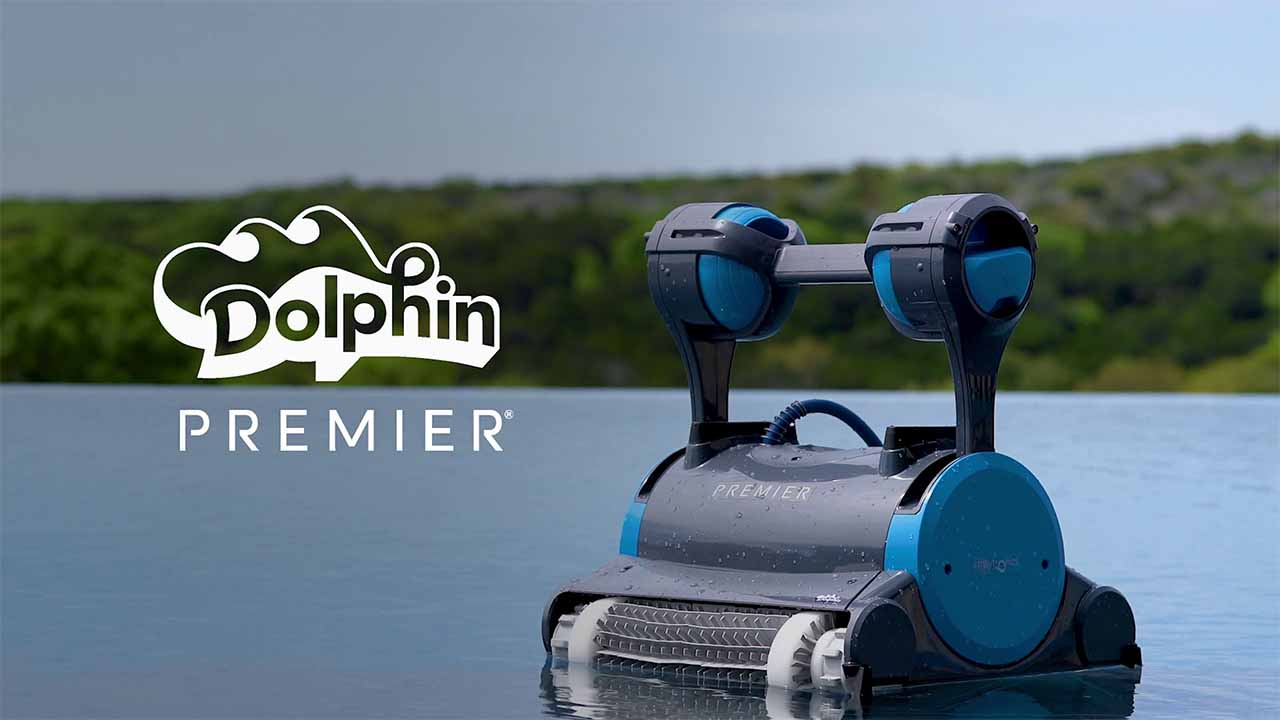
Corner cleaning rewards patience, and the Premier has the longest cycle of these picks at three hours. Over that time SmartNav 2.0 scanning brings its dual scrubbing brushes into each corner from the floor, from both adjoining walls and on the way up to the waterline, and every approach takes a little more of the wedge a single pass leaves.
What the brushes loosen has to be caught. NanoFilters are in the box for exactly the fine material corners hold. The 55 ft cable turns on a 360-degree swivel, so repeated tight turns do not wind it up.
Best for
Rectangular and geometric pools up to 50 ft where corners collect fine dust and the tile line marks up.
Keep in mind
Two brushes, not four. Against established algae in corners, the Sigma puts more brush on the surface per pass.
The Sigma carries quad scrubbing brushes, the most of any robot in this guide, so each approach to a corner puts more bristle against the surface. That is the difference you notice where algae has taken hold in the joint or in a step corner. Three commercial-grade ProLine motors keep 4,500 GPH moving through it, and NanoFilters are included for what comes loose.
SmartNav 3.0, with its onboard gyroscope, keeps coverage orderly, so corners are met squarely instead of at whatever angle drift produces. It ranks second on price, the highest of the four, and on a cycle half an hour shorter.
Best for
Pools with recurring algae in corners, step corners and the wall-floor joint.
Keep in mind
You pay the most for it and lift the most, 24.6 lb. No robot's brushes reach the very apex of a square corner, this one included.
The Quantum takes a different route to brush contact: two HyperBrush rollers spinning at twice the speed of standard brushes. Faster bristles make more strokes on each approach, which suits the light film and dust most corners collect. Its published coverage includes stairs, so step corners are part of its brief, and its scanning is described as sensing ladders.
A full set of NanoFilter panels comes with the XXL MaxBin basket. The cycle is 2 hours, so it makes fewer approaches per run than the two robots above; the timer and app make frequent runs easy.
Best for
Pools up to 50 ft with steps and ladders, where corners gather dust more than algae.
Keep in mind
Its cycle is an hour shorter than the Premier's, and its warranty a year shorter. Run it more often to make up the approaches a longer cycle would give.
Smaller pools put their corners closer together, and in one of 33 ft or under a 2-hour cycle visits each corner often. The Cayman works them with a single HyperBrush spinning at twice the speed of standard Dolphin brushes, on HyperGrip tracks that climb the walls and sweep the floor joint on the way. Its timer runs every day, and daily attention is good prevention: nothing sits in a corner for long.
It has one brush where the others have two or four, NanoFilter panels are an optional add-on, and its 50 ft cable has no swivel, so it needs straightening as tight turns add up.
Best for
Smaller in-ground pools, up to 33 ft, where cleaning every day stops corner dirt before it builds.
Keep in mind
One brush, no swivel and no waterline scrubbing, so corners at the tile line are yours to wipe.
How we ranked them: We matched filtration, brush system, coverage, debris capacity, automation, and warranty to this page's buying need. Pool fit carries more weight than the longest feature list.
Buying criteria
How a Robot Actually Cleans a Corner
01
Brush contact
Brushes do the corner work, since suction alone will not lift what clings in a dead spot. More brushes, or faster ones, mean more scrubbing on each approach. Compare brush count and speed before motor figures.
02
Approaches from different angles
One pass into a corner leaves a wedge untouched. A second pass from the adjoining wall takes most of it. Longer cycles and navigation that varies the route both add approaches, and this is where cycle length earns its keep.
03
The wall-to-floor turn
The joint between floor and wall is one long corner. A wall-climbing robot sweeps it each time it tips up to climb and each time it comes back down, so a robot that climbs often cleans the joint well.
04
Fine filtration
What settles in corners is mostly fine: dust, pollen, dead algae. A brush that loosens it helps only if the filter then holds it. Otherwise it drifts back to the same still water.
Side-by-side
Brushes, Cycle and Filtration Compared
Only the models recommended on this page, and only the specs that decide this choice.
How hard a corner is to clean depends on its shape. A radius corner, the curved kind found in most vinyl and fiberglass pools and many gunite ones, is easy: brushes follow the curve and little is left. A true 90-degree corner, common in geometric gunite and tile pools, leaves a small triangle at the apex that a cylindrical brush cannot enter. Step corners are tightest of all, with three surfaces meeting, and only the Quantum lists stairs in its published coverage.
The space behind a ladder is a corner by another name. A robot may nose in beside the rails and not behind them. A ladder that lifts out makes the question go away for the length of a cycle.
The Last Inch Belongs to a Hand Brush
This is the honest limit. In a square corner, expect any robot to leave a sliver at the apex and to do better on the floor of the corner than on its vertical edge. The remedy is small. Every week or two, run a pool brush down each vertical corner and along the step corners, pushing the loosened dirt onto open floor. The next cycle collects it.
Circulation helps as much as brushing. Corners get dirty because water stalls there, so angle a return fitting to push flow along the wall toward the worst one. A robot does not replace sanitizer or a skimmer, and during an algae treatment the corners still need brushing by hand.
The Escape, which we also sell, cleans corners the same way with the same single HyperBrush. We left it off the ranking for its 40 ft cable and shorter cycle.
Getting More Out of a Robot in the Corners
Brush vertical corners and step corners toward open floor shortly before a cycle, so the robot picks up what its own brushes cannot reach.
Fit the finest media you have when corners look dusty. Coarse media lets fine corner dirt pass through and settle back where it came from.
Lift out removable ladders before a cycle so the wall behind them gets cleaned.
Run cycles more often in warm weather. Corners are where algae starts, and frequent brushing keeps film from settling in.
Buy with confidence
Protection beyond the product.
Buying through an authorized dealer gives you a clear warranty and support path. When purchased here, every featured cleaner also includes free shipping, a 30-day in-pool trial, and $0 restocking on returns.
Most of it. Brushes reach into the corner from each adjoining surface and take all but a small triangle at the apex, which a round brush cannot enter. Repeat approaches shrink that triangle without removing it. A hand brush down the corner every week or two finishes the job.
Why does algae keep starting in the corners of my pool?
Water barely moves there. Sanitizer arrives slowly, debris settles, and brushing is easy to skip. A robot helps by scrubbing corners every cycle, but it is not a treatment. Check sanitizer and circulation first, aim a return toward the problem corner, and brush by hand during any algae treatment.
Do robots clean behind pool ladders?
Partly. A robot will work up to and beside the rails, and narrow gaps behind them are often missed. The Quantum's scanning is described as sensing ladders, which helps it avoid hanging up there, though sensing is not the same as cleaning behind. Lifting the ladder out for a cycle is the dependable answer.
Is a smaller robot the best robotic pool cleaner for tight corners?
Not for that reason. No robot is small enough to sit in a corner, and corners are cleaned by brush contact from repeated approaches. A lighter robot such as the Cayman is easier to handle, which is a fair reason to choose it, but brush count, brush speed and cycle length matter more to the corners.
By Steps, Ledges & Slopes
Keep Exploring
Compare another buying need or open the complete guide library.
Decide what is in your corners. Fine dust and a tile line that marks: the Premier, for the most approaches and the filters to hold what they loosen. Algae that keeps returning: the Sigma, for four brushes on every approach. Dust around steps and ladders on a mid-range budget: the Quantum. A pool of 33 ft or less cleaned daily: the Cayman. Then keep a brush by the pool, because in a square corner the last inch is still yours.