Our shortlist focuses on Dolphin models available with authorized-dealer support. The buying criteria below also give you a useful framework for evaluating alternatives from any brand.
A brush on a robot can do one of two things. It can turn at the pace of the tracks, in which case it mostly sweeps. Or it can be driven faster than the robot travels, so the bristles slide across the surface and scrub. The second kind is an active brush, and it is what you are asking for when you search for the best robotic pool cleaner with active brushes.
Dolphin's name for its faster brush is the HyperBrush, which spins at twice the speed of standard brushes. Three of the five robots compared here have one or two of them. The other two take a different route, more brushes at standard speed, and we describe them that way without relabeling them.
$0 restockingNo-cost exchanges
Free shippingNationwide
Up to 3 yearsPremier & Sigma
30-day trialIn your own pool
Expert shortlist
Four Robots Ranked on Active Brushing
Ranked for this job, with the reason each model earned its place and the point where it stops being the right choice.
The Quantum is the only robot of the five compared here with two HyperBrushes. Each spins at twice the speed of standard brushes, so a fast brush leads whichever way the robot moves, on the floor and up the wall. It also takes that scrubbing to more places than the other picks: its published cleaning areas include the waterline, sun shelves, Baja ledges and stairs. HyperGrip continuous rubber tracks keep it planted while the brushes work, and the XXL MaxBin basket includes NanoFilter panels to trap what they lift.
Best for
Pebble and plaster pools, pools with shelves or stairs, and anyone whose main complaint is film on walls and at the waterline.
Keep in mind
In-ground pools only, and the warranty is 2 years. Flow is 4,000 GPH, a little under the next two picks.
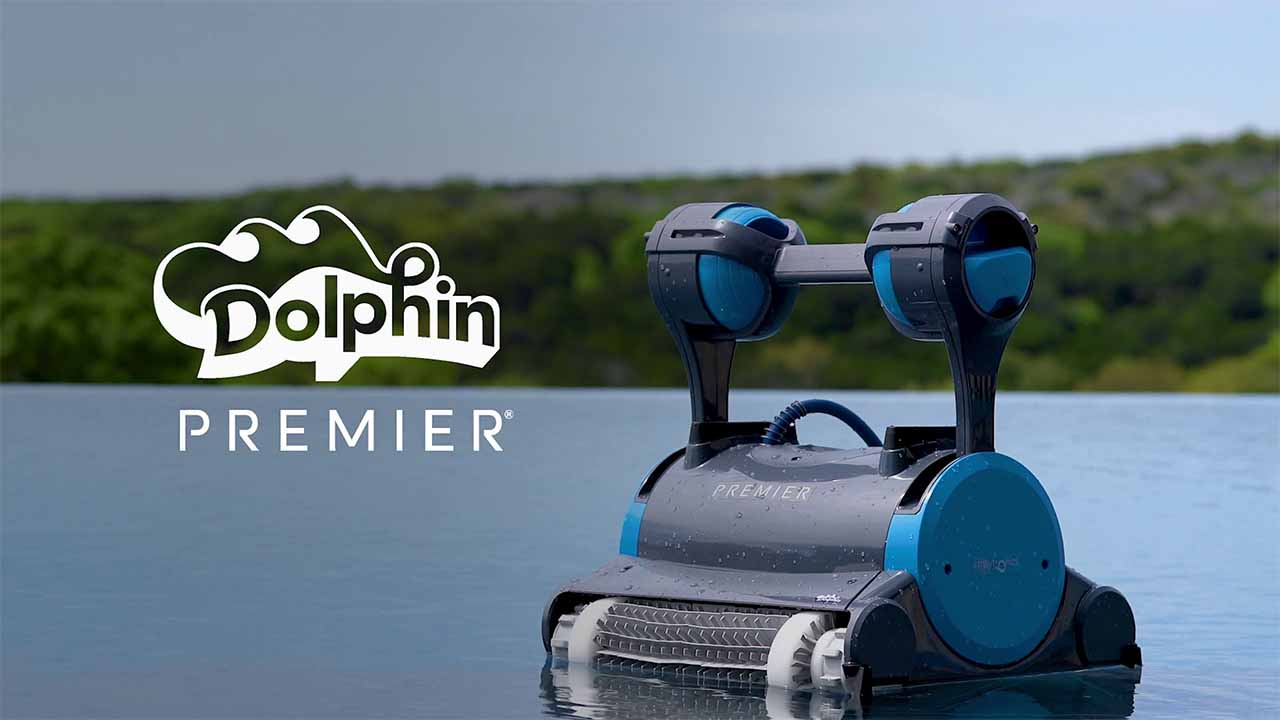
Accuracy first: the Premier's brushes are dual scrubbing brushes, not HyperBrushes, and no faster spin is published for them. It is second because brush speed is only half of scrubbing. The Premier answers with contact and time: a brush at each end, a 3-hour cycle that is the longest here, and 4,500 GPH from dual commercial-grade ProLine motors to pull loosened film off the surface. The NanoFilters in its Multi-Media set then hold that film. It cleans floor, walls and waterline in pools up to 50 ft and carries a 3-year warranty.
Best for
Owners who want thorough scrubbing together with leaf capacity, fine filtration and a long warranty in one in-ground robot.
Keep in mind
Its brushes turn at standard speed. If a published fast brush is the feature you are shopping for, the Quantum is the pick.
The Sigma takes the count further with quad scrubbing brushes, four where the others have two or one. Like the second pick's, they are scrubbing brushes and not HyperBrushes, so the Sigma's case is surface contact, and it has more of that than any robot of the five. Its three commercial-grade ProLine motors deliver 4,500 GPH, SmartNav 3.0 keeps the passes orderly, and NanoFilters are included. The 2.5-hour cycle covers floor, walls and waterline. It ranks third because this page is about brush speed, where it makes no claim, and because it sits at the top of the price range on this page.
Best for
Pools up to 50 ft where maximum brush contact, app scheduling and orderly navigation matter more than a fast-brush label.
Keep in mind
No published faster spin, the highest price of the four, and 24.6 lb to lift. Filter access is by cartridge.
The Cayman has what the two picks above it lack, a HyperBrush, though it has one where the leader has two. That brush spins at twice the speed of standard Dolphin brushes, and in a pool of 33 ft or less the robot covers the same ground repeatedly in a cycle, so one fast brush goes a long way on floor and walls. It is rated for in-ground and above-ground pools, weighs 14.6 lb, and its timer starts a 2-hour cycle every day. It is last here because of where it does not reach: the waterline.
Best for
In-ground or above-ground pools up to 33 ft where a fast brush on floor and walls is enough.
Keep in mind
One brush, no waterline scrubbing, and NanoFilter panels are an optional add-on. Over 33 ft, look at the first two picks.
How we ranked them: We matched filtration, brush system, coverage, debris capacity, automation, and warranty to this page's buying need. Pool fit carries more weight than the longest feature list.
Buying criteria
How to Judge an Active Brush
01
A Published Speed Claim
Any brush that turns looks active in a video. The useful test is whether a speed is published relative to something. The HyperBrush is stated at twice the speed of standard brushes. Where no figure is published, treat the brush as a standard scrubbing brush.
02
A Fast Brush at One End or Both
With a HyperBrush at both ends, a scrubbing brush meets the surface first whichever way the robot is heading. With one, that holds in one direction only, which matters less in a small pool that gets crossed many times in a cycle.
03
Where the Brush Can Reach
Scrubbing matters most where film is visible: the waterline, steps and shallow shelves. Check each robot's published cleaning areas. A fast brush that never gets to the waterline cannot scrub it.
04
What Carries the Film Away
Scrubbed film is fine material. It needs flow to pull it in and fine media to hold it. Look for ultra-fine panels in the box, or plan for them as an add-on.
Side-by-side
Brushes and Specs Compared
Only the models recommended on this page, and only the specs that decide this choice.
Brush names are marketing, so it helps to pin them to what is published. An active brush, in the general sense, is driven faster than the robot's ground speed. HyperBrush is Dolphin's name for a brush stated to spin at twice the speed of standard brushes. A scrubbing brush is a powered brush with no published speed advantage. The table shows which robot has which. The Escape appears for completeness: it has the same single HyperBrush as the Cayman and suits above-ground pools, but with the shortest cable of the five and no timer as standard it sits outside the four picks.
Robot
Brushes
Published speed
Scrubs the waterline
Dolphin Quantum
Dual HyperBrush
Twice the speed of standard brushes
Yes
Dolphin Premier
Dual scrubbing brushes
None published
Yes
Dolphin Sigma
Quad scrubbing brushes
None published
Yes
Dolphin Cayman
One HyperBrush
Twice the speed of standard Dolphin brushes
No
Dolphin Escape
One HyperBrush
Twice the speed of standard Dolphin brushes
No
Where a Faster Brush Earns Its Keep
Brush speed is not equally useful everywhere. These are the three places it shows.
Algae film. The first stage of algae is a slick layer you feel before you see. A fast brush lifts it on routine cycles so the sanitizer and the filter can deal with it. It does not treat a bloom, which still needs chemicals and hand brushing.
Pebble and textured finishes. Film sits in the low spots between stones. More strokes per pass put more bristle tips into those spots than a brush turning at ground speed.
The waterline. Sunscreen, body oil and pollen bake into a line at the surface. A fast brush working that line each cycle keeps it from hardening, on robots that list waterline cleaning.
What an Active Brush Cannot Do
A fast brush does not replace sanitizer. It only exposes film to it. It does not remove scale, which is mineral and needs chemistry. It does not reach the top step, tight corners or the gap behind a ladder as well as a hand brush does, and most robots do not clean shallow ledges unless those areas are on their published list. Speed does not make up for a clogged filter either: once the panels are loaded, flow drops and loosened film drifts back to the floor.
Using a Fast-Brush Robot Well
On a new pebble or plaster finish, ask your builder when a robot may go in. Fresh finishes need curing time before any brush touches them.
Fit the ultra-fine panels for the first cycle after you brush the pool by hand, then switch back once the water is clear.
Watch one wall climb. If a robot that should reach the waterline stops short, check the water level and rinse the filter before blaming the brush.
Keep the tracks clean as well as the brush. Traction is what presses a spinning brush against a wall.
Buy with confidence
Protection beyond the product.
Buying through an authorized dealer gives you a clear warranty and support path. When purchased here, every featured cleaner also includes free shipping, a 30-day in-pool trial, and $0 restocking on returns.
What makes a robotic pool cleaner with active brushes different from an ordinary one?
The brush is powered to turn faster than the robot moves, so the bristles scrub across the surface. A passive brush turns only as fast as the robot rolls and mostly sweeps. On the Dolphins compared here, the published fast brush is the HyperBrush, at twice the speed of standard brushes.
Is the HyperBrush the same thing as an active brush?
HyperBrush is Dolphin's name for its faster-spinning brush, so it is that brand's version of the idea. The Quantum has two, and the Cayman and Escape have one each. The Premier and Sigma use scrubbing brushes with no published speed figure.
Will a fast brush scratch my pool surface?
The brushes are made for pool finishes, and each pick publishes the surfaces it is intended for, including vinyl liner, fiberglass, plaster, pebble and tile. Use a robot only on surfaces its documentation lists, keep grit rinsed out of the brush, and on a new finish wait for your builder's go-ahead.
Do I still need to brush the pool by hand?
Less, but yes. Steps, corners, the space behind ladders and the area around fittings get the least attention from any robot. A quick weekly pass with a hand brush in those spots, plus a full brushing during any algae treatment, covers what the robot misses.
By Feature
Keep Exploring
Compare another buying need or open the complete guide library.
If a published fast brush is the feature you want, the choice is simple: the Quantum for in-ground pools up to 50 ft. For pools up to 33 ft, in the ground or above it, the Cayman. If you care more about the result than the label, weigh contact and filtration too: the Premier brings two scrubbing brushes with the deepest filter set, and the Sigma brings four. Tell us your surface and pool length and we will point you to one: ask a pool expert.