Our shortlist focuses on Dolphin models available with authorized-dealer support. The buying criteria below also give you a useful framework for evaluating alternatives from any brand.
Suction picks up what is loose. A brush is what makes dirt loose in the first place. That is the reason to shop for the best robotic pool cleaner with dual brushes: with a brush at each end, the robot scrubs on the way out and again on the way back, and on a wall it has two lines of contact where a single-brush robot has one.
Three of the five Dolphins compared here have at least two brushes, and they differ in a way that matters. One has two scrubbing brushes, one has four, and one has two that spin at double speed. The other two robots carry a single brush each and are not picks on this page. Below we explain what brushing does that suction cannot, how the three differ, and which pool each suits.
$0 restockingNo-cost exchanges
Free shippingNationwide
Up to 3 yearsPremier & Sigma
30-day trialIn your own pool
Expert shortlist
Three Dual-Brush Robots, Ranked
Ranked for this job, with the reason each model earned its place and the point where it stops being the right choice.
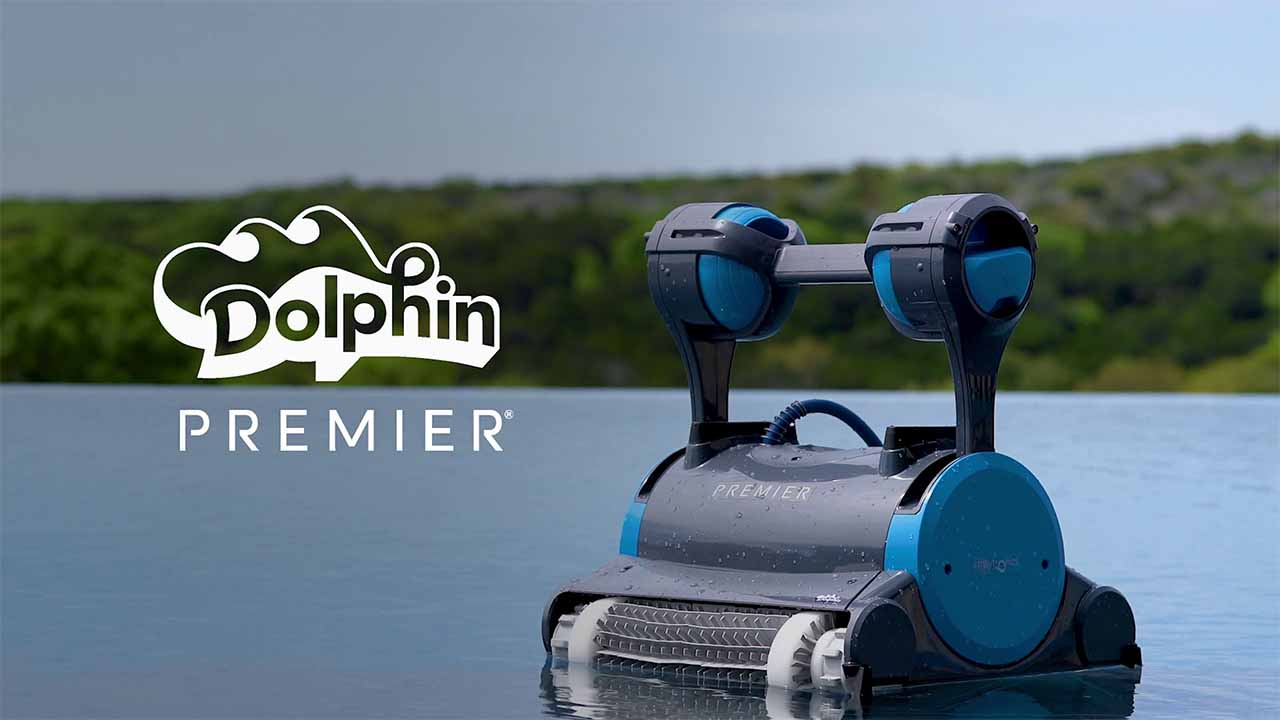
The Premier's dual scrubbing brushes are one part of a balanced machine, and that balance is why it leads. The brushes loosen film from floor, walls and waterline. Dual commercial-grade ProLine motors pull 4,500 GPH across them. The NanoFilters in the Multi-Media set trap the fine material that scrubbing releases, which a coarse filter would pass straight back into the pool. Its 3-hour cycle is the longest of the three picks, which gives the brushes more time on each surface. It is published for concrete, plaster, gunite, pebble, tile, vinyl liner and fiberglass, in pools up to 50 ft.
Best for
In-ground pools up to 50 ft that need steady scrubbing of floor, walls and waterline, plus filtration for whatever the brushes lift.
Keep in mind
Two brushes, not four, and they are scrubbing brushes at standard speed. Control is on the power supply only, and at 20.3 lb it is not the lightest lift.
The Sigma goes past dual. It carries quad scrubbing brushes, the most brush contact of the five Dolphins compared here. On a pool where film returns quickly, such as a shaded plaster pool or one with a heavy swimmer load, four brushes put more bristle on each strip of surface per pass. Three commercial-grade ProLine motors and 4,500 GPH carry what they lift into NanoFilters or standard cartridges, both included, and the cycle runs 2.5 hours over floor, walls and waterline. It is second, not first, because it is the highest-priced robot here and most pools do not need four brushes to stay clean.
Best for
Pools up to 50 ft where film and algae return quickly, and owners who want the most scrubbing along with app scheduling.
Keep in mind
It costs the most of the three and weighs the most, 24.6 lb. Its filters are cartridges, a different routine from a basket.
The Quantum has two brushes like the first pick, with one difference: they are HyperBrushes, spinning at twice the speed of standard brushes. Speed helps on textured finishes, where film sits in the low spots of pebble and a faster brush gets more strokes into them per pass. Its published cleaning list goes beyond floor, walls and waterline to sun shelves, Baja ledges and stairs, places where dirt is in plain view. The cycle is 2 hours, flow is 4,000 GPH, and a full set of NanoFilter panels comes with the XXL MaxBin basket. It ranks third on warranty length and a slightly lower flow rate.
Best for
Pebble and other textured finishes, pools with shelves and stairs, and buyers who want dual brushes at the lowest price of the three.
Keep in mind
Two years of warranty where the other picks have three, and 4,000 GPH against 4,500. In-ground pools only.
How we ranked them: We matched filtration, brush system, coverage, debris capacity, automation, and warranty to this page's buying need. Pool fit carries more weight than the longest feature list.
Buying criteria
What to Look For in a Dual-Brush Robot
01
Scrubbing on Both Passes
A robot reverses constantly. With a brush front and rear, the leading edge is always a brush, so film is loosened ahead of the intake in either direction. With one brush, half the passes lead with the plain end.
02
Contact on Walls and at the Waterline
On a wall, two brushes give two bands of contact on the way up and again on the way down. All three picks also clean the waterline, where oils and scale collect and where scrubbing shows most.
03
Brush Count Versus Brush Speed
More brushes mean more contact per pass. A faster brush means more scrubbing strokes per foot traveled. The picks here take both routes: two brushes, four, or two at twice the speed. Neither route is wrong. They suit different surfaces.
04
Flow and Filtration Behind the Brush
A brush only loosens dirt. Something has to carry it into the filter before it settles again. Judge the flow rate and the filter media alongside the brush count, because scrubbed film is very fine and takes fine media to trap.
Side-by-side
Dual-Brush Picks, Spec by Spec
Only the models recommended on this page, and only the specs that decide this choice.
Much of what makes a pool look dull is not loose debris. It is film: algae getting started, biofilm, body oils, and fine dirt bonded to the surface by all three. Water flowing over that film does not move it, which is why a pool can be vacuumed and still feel slick underfoot. A brush breaks the bond mechanically. Once the film is lifted, the robot's intake draws it into the filter.
That is also the limit. A robot's brush is maintenance, not treatment. It keeps a clean surface clean by removing film before it takes hold. It does not treat an algae bloom, and during one you still need to dose the water and brush by hand. Think of dual brushes as what makes the weekly hand-brushing shorter, not what ends it.
Two Brushes, Four Brushes, or Two Fast Ones
The three picks are not three sizes of the same thing. Each makes a different bet about how to scrub, listed below. The Cayman and Escape are missing for a simple reason: each has one HyperBrush. It is a fast brush, and both robots are rated for floor and walls in pools up to 33 ft, but one brush is not dual, so they are not picks here. For a smaller or above-ground pool, find them on the full robot list.
Two scrubbing brushes (Premier): one at each end, working through the longest cycle here. Suits smooth and mixed surfaces where regular contact is enough.
Four scrubbing brushes (Sigma): more bristle on the surface at any moment. Suits pools where film comes back fast.
Two HyperBrushes (Quantum): the same count as the Premier, at twice the speed of standard brushes. Suits textured finishes and visible ledges.
Matching Brushes to Your Surface
Vinyl liner and fiberglass are smooth, and film wipes off them easily. Two scrubbing brushes are plenty, and the benefit shows most at the waterline. Plaster and gunite are slightly rough and hold film in their pores, so more contact and more speed both help. Pebble has real texture, and a faster brush reaches into it better than a slower one. Tile is smooth but has grout lines, where a brush does work that suction cannot. All three picks list vinyl liner, fiberglass, plaster, gunite, pebble and tile among their published surfaces.
Helping the Brushes Do Their Job
Keep the water balanced. Scale hardens film into a crust that no robot brush will shift, and that is a chemistry problem, not a brushing one.
Run the robot before film is visible. Brushes prevent buildup far more easily than they remove it.
Hand-brush steps, corners and the area behind ladders once a week. Robots, with two brushes or four, reach those spots least.
Hose the brushes off when you rinse the filter. Hair and string wound around a brush reduce its contact.
Buy with confidence
Protection beyond the product.
Buying through an authorized dealer gives you a clear warranty and support path. When purchased here, every featured cleaner also includes free shipping, a 30-day in-pool trial, and $0 restocking on returns.
Is a robotic pool cleaner with dual brushes better than one with a single brush?
For scrubbing, yes. Two brushes mean one is always leading, whichever way the robot travels, and a wall gets two bands of contact. A single fast brush still does good work in a smaller pool, and the two single-brush robots compared here remain sound choices for pools up to 33 ft. They are simply not dual-brush robots.
Do four brushes clean twice as well as two?
No, and we would not claim it. Four brushes put more bristle on the surface per pass, which helps where film returns quickly. For a pool that is balanced and cleaned on a regular schedule, two brushes keep up. Pay for four when the pool has shown you it needs them.
Will dual brushes remove algae?
They remove the early film that algae starts as, and they help collect dead algae after treatment. They do not treat a bloom. For green, yellow or black algae, treat the water, brush by hand, and use the robot afterward with fine filter media to pick up what settles.
Can dual brushes be used on a vinyl liner or fiberglass?
Yes. Vinyl liner and fiberglass are published surfaces for all three picks. Those finishes are smooth, so the brushes have an easy job, and more of the benefit shows at the waterline, where lotion and oils leave a line.
Do robot brushes wear out?
Yes. They are wear parts, like tires. How fast depends on the surface: rough plaster and pebble wear them sooner than vinyl. Check them when you rinse the filter and replace them when the scrubbing surface looks worn, since a worn brush slides over film it used to lift.
By Feature
Keep Exploring
Compare another buying need or open the complete guide library.
Start from the surface and the problem. Smooth or mixed surfaces and a pool that needs everything done well: the Premier's dual scrubbing brushes and its range. Film that keeps coming back however often you brush: the Sigma's four. Pebble, shelves and stairs, or the lowest price of the three: the Quantum's dual HyperBrush. Pool of 33 ft or under, or above ground: a single-brush robot is the right size, and that is a different page.