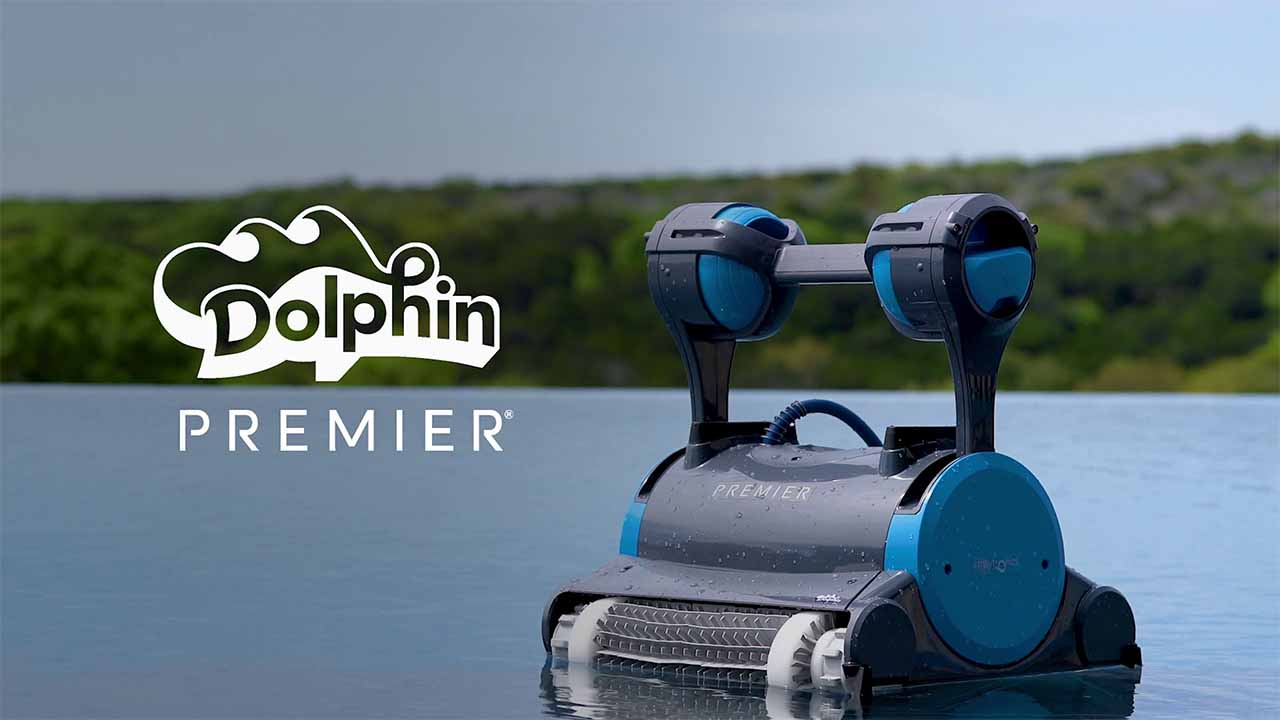
Our shortlist focuses on Dolphin models available with authorized-dealer support. The buying criteria below also give you a useful framework for evaluating alternatives from any brand.
The best robotic pool cleaner for kidney-shaped pools is the one that does not get fooled by the shape. A kidney curves in on one side, so a robot traveling in straight lines meets the wall at a different angle on nearly every pass, and a machine that keeps turning the same way can end up working one lobe harder than the other.
Three things decide whether the whole pool gets cleaned: how the robot navigates when no two walls are parallel, whether its cable keeps up with constant changes of direction, and whether the robot is rated for the pool's true length. That length is the longest straight line through the water, lobe tip to lobe tip, not the width of either lobe.
$0 restockingNo-cost exchanges
Free shippingNationwide
Up to 3 yearsPremier & Sigma
30-day trialIn your own pool
Expert shortlist
Four Robots for Kidney Pools, Ranked by Fit
Ranked for this job, with the reason each model earned its place and the point where it stops being the right choice.
The Premier leads because a kidney rewards patience more than cleverness. SmartNav 2.0 scanning keeps re-plotting as the walls curve away, and the 3-hour cycle, the longest of the four, gives it time to work both lobes and the waist between them. The 360-degree swivel absorbs the twisting that curved walls cause.
Kidney pools also tend to sit inside landscaping. Multi-Media filtration lets you load the oversized leaf bag when the beds are shedding and NanoFilters when the problem is dust. Both come in the box and load from the top.
Best for
Kidney pools of 30 to 50 ft with planting nearby and a tile line worth keeping clean.
Keep in mind
No phone control and no gyroscope. Scheduling is a three-preset timer on the power supply.
If any robot is built for walls that refuse to stay parallel, it is the Sigma. SmartNav 3.0 adds an onboard gyroscope, so the robot knows which way it is pointing after the inside curve has knocked it off line, and it corrects instead of drifting back toward the same lobe. Quad scrubbing brushes work the floor, walls and waterline in a 2.5-hour cycle.
It sits second for one reason: it is the highest-priced pick here, and SmartNav 2.0 already covers a typical kidney well. Pay for it when you also want the myDolphin Plus app and a day-and-time scheduler.
Best for
Owners who want the most orderly coverage available and like running the pool from a phone.
Keep in mind
Highest price on the page, and at 24.6 lb it is the heaviest of the four to lift out.
The Quantum gives a kidney pool the two things it needs most, a 50 ft rating and an anti-tangle swivel on a 55 ft cable, at the lowest price among the 50 ft robots in this guide. It runs SmartNav 2.0 and cleans floor, walls and waterline in a 2-hour cycle with a dual HyperBrush.
Many kidneys put the steps or a sun shelf in the wide lobe, and the Quantum is the one model here whose published coverage names stairs, sun shelves and Baja ledges. A full set of NanoFilter panels is included.
Best for
Kidney pools over 33 ft where steps or a shelf matter and the budget stops short of the Premier.
Keep in mind
The warranty runs two years, a year less than the top two picks, and the shorter cycle means fewer passes per run.
A small kidney does not need a 50 ft robot. The Cayman is rated for pools up to 33 ft, uses the same SmartNav 2.0 scanning as the Premier, and climbs the walls on HyperGrip tracks behind a fast-spinning HyperBrush. At 14.6 lb it is easy to lift over a curved coping.
The trade is in the cable: 50 ft with no swivel. In a kidney the robot turns often, so plan to lay the cable out straight every few cycles. It cleans floor and walls and leaves the tile line to you.
Best for
Kidney pools with a longest run of 33 ft or less, in-ground or above-ground.
Keep in mind
No waterline scrubbing, no swivel, and a timer with a single every-day setting. The 33 ft rating is a firm limit.
How we ranked them: We matched filtration, brush system, coverage, debris capacity, automation, and warranty to this page's buying need. Pool fit carries more weight than the longest feature list.
Buying criteria
What Decides Coverage in a Kidney Pool
01
True length, lobe tip to lobe tip
Robots are rated by pool length, meaning the longest straight run. On a kidney that line goes from the far tip of one lobe to the far tip of the other. If it measures over 33 ft, start with the 50 ft robots: the Premier, Sigma and Quantum.
02
Navigation without parallel walls
A kidney gives a robot no square corner to line up on. The Sigma's SmartNav 3.0 uses an onboard gyroscope to hold a heading and correct after each turn. The other three picks rely on SmartNav 2.0 scanning, which covers a kidney well across a full cycle.
03
A cable that turns with the robot
Every curve means a change of direction, and every change of direction twists the cable. The Premier, Sigma and Quantum each have a 55 ft cable with an anti-tangle swivel that lets those twists spin out. The Cayman's 50 ft cable has no swivel, so it needs straightening by hand.
04
The curved tile line
Kidney pools usually carry a tile band or scum line all the way around, including the inside curve where a brush pole is awkward. The Premier, Sigma and Quantum scrub the waterline in every cycle. The Cayman stops at floor and walls.
Side-by-side
Kidney Pool Picks Compared Spec by Spec
Only the models recommended on this page, and only the specs that decide this choice.
Builders describe kidney pools by their widest and longest points, something like 16 by 32 or 20 by 40, but a robot cares about one line. Run a tape straight across the water from the far tip of one lobe to the far tip of the other. Do not measure around the outside curve.
Cable reach is a separate check. Decide where the power supply will sit, set back from the edge by the distance in your manual, then measure from there to the farthest point of the pool. The best position is usually beside the long outside curve, near the middle, so the cable feeds both lobes without draping across the inside curve.
When One Lobe Stays Dirtier Than the Other
It happens, and it is rarely the robot's fault alone. Return jets often push fine debris toward the calmer lobe, so that end starts out dirtier, and a cable wound up tight tugs the robot back toward the power supply. Work through these before blaming the navigation:
Drop the robot into a different lobe each time instead of the same spot.
Check the cable for coils before a cycle. Without a swivel, lay it out straight on the deck.
Let the cycle finish. Pulling the robot early is the usual reason a section gets missed.
If the pattern persists, shift the power supply a few feet along the deck and compare.
What a Robot Will Not Do in a Kidney Pool
Kidney pools often have steps tucked into the curve of one lobe. A robot needs water over it to hold suction, so the lower treads get attention and the top step usually needs a quick brush toward the pool before the cycle. A robot also does not skim the surface, replace sanitizer, or stand in for brushing during an algae treatment. It removes what has settled and scrubs what it can reach, which in a kidney is nearly all of the floor and walls.
Setup Tips for a Kidney-Shaped Pool
Place the power supply beside the outside curve near the pool's midpoint so the cable reaches both lobes evenly.
Feed in only as much cable as the robot needs to reach the far lobe, and leave the rest on the deck.
Watch where the first few cycles finish and what they leave behind, then set the timer once you trust the coverage.
Empty and rinse the filter at least weekly, and more often when nearby plants are dropping leaves or blossoms.
Buy with confidence
Protection beyond the product.
Buying through an authorized dealer gives you a clear warranty and support path. When purchased here, every featured cleaner also includes free shipping, a 30-day in-pool trial, and $0 restocking on returns.
Do robotic pool cleaners work in kidney-shaped pools?
Yes. A kidney is the most common freeform shape, and freeform is on the published shape list for every robot on this page. The curve changes how the robot's path looks, not whether it cleans. Length is the thing to confirm, which is why the best robotic pool cleaner for kidney-shaped pools over 33 ft is a 50 ft model.
Does the inside curve of a kidney pool confuse a robot?
It changes the angle at which the robot meets the wall, which is why a simple back-and-forth pattern can favor one lobe. SmartNav 2.0 scanning deals with it by re-plotting through the cycle, and the Sigma's gyroscope corrects its heading after each turn.
Is a gyroscope worth paying for in a kidney pool?
It gives the most orderly path, and the Sigma is the only pick here that has one. A plain kidney of ordinary size is covered well by SmartNav 2.0. A large kidney with an attached spa, a shelf and steps gives the gyroscope more to do, and that is where the step up earns its price.
Can a robot rated for above-ground pools clean a small in-ground kidney?
The Cayman can, because it is rated for both in-ground and above-ground pools up to 33 ft. Just know what you give up next to the 50 ft robots: it cleans floor and walls only, and its 50 ft cable has no swivel.
By Pool Shape
Keep Exploring
Compare another buying need or open the complete guide library.
Measure the longest straight line through the pool first. Over 33 ft, choose among the three 50 ft robots: range and a long cycle point to the Premier, a tighter budget to the Quantum. The Sigma is for owners who want a gyroscope and a phone scheduler. At 33 ft or under, the Cayman is enough robot if you can live without waterline scrubbing. Our 30-day in-pool trial is there to prove the fit in your own water.