Try it in your pool for 30 days. Exchange it for another Dolphin for free, or return it with no restocking fee.
Your bag is empty.
By Pool Shape
Robotic Pool Cleaners for Irregular-Shaped Pools: T-Shapes, Peninsulas, Islands
A pool with an island, a peninsula or an arm off to one side makes a robot find its way around something. Here is which ones manage it and where all of them stop.
Our shortlist focuses on Dolphin models available with authorized-dealer support. The buying criteria below also give you a useful framework for evaluating alternatives from any brand.
A curvy pool and an irregular one are different problems. A freeform bends, but the water is still one open room. An irregular pool has something in the way: a peninsula, an island, a T or Z where one arm hides from the other, a narrow channel joining two basins. The best robotic pool cleaner for irregular-shaped pools is the one that keeps its bearings after an obstacle has turned it.
A robot is not handed a drawing of your pool. It works out its path as it goes, so what counts is how well it recovers when a wall is not where a simple pattern expects it, and whether its cable can follow it around a corner without wrapping.
$0 restockingNo-cost exchanges
Free shippingNationwide
Up to 3 yearsPremier & Sigma
30-day trialIn your own pool
Expert shortlist
Irregular Pool Picks in Order of Fit
Ranked for this job, with the reason each model earned its place and the point where it stops being the right choice.
Irregular pools are one layout where we rank the Sigma ahead of our own flagship. SmartNav 3.0 steers with an onboard gyroscope, so when a peninsula or a wall jog spins the robot, it still knows which way it was heading and resumes instead of guessing again. That matters most where one arm of the pool is out of sight of the other.
Three commercial-grade ProLine motors, quad scrubbing brushes and HyperGrip tracks do the cleaning across floor, walls and waterline, and a 360-degree swivel keeps the 55 ft cable from winding up.
Best for
T, Z and peninsula pools up to 50 ft, and any layout where one section hides from another.
Keep in mind
The highest price of the four, and at 24.6 lb the heaviest of them to carry between separated zones.
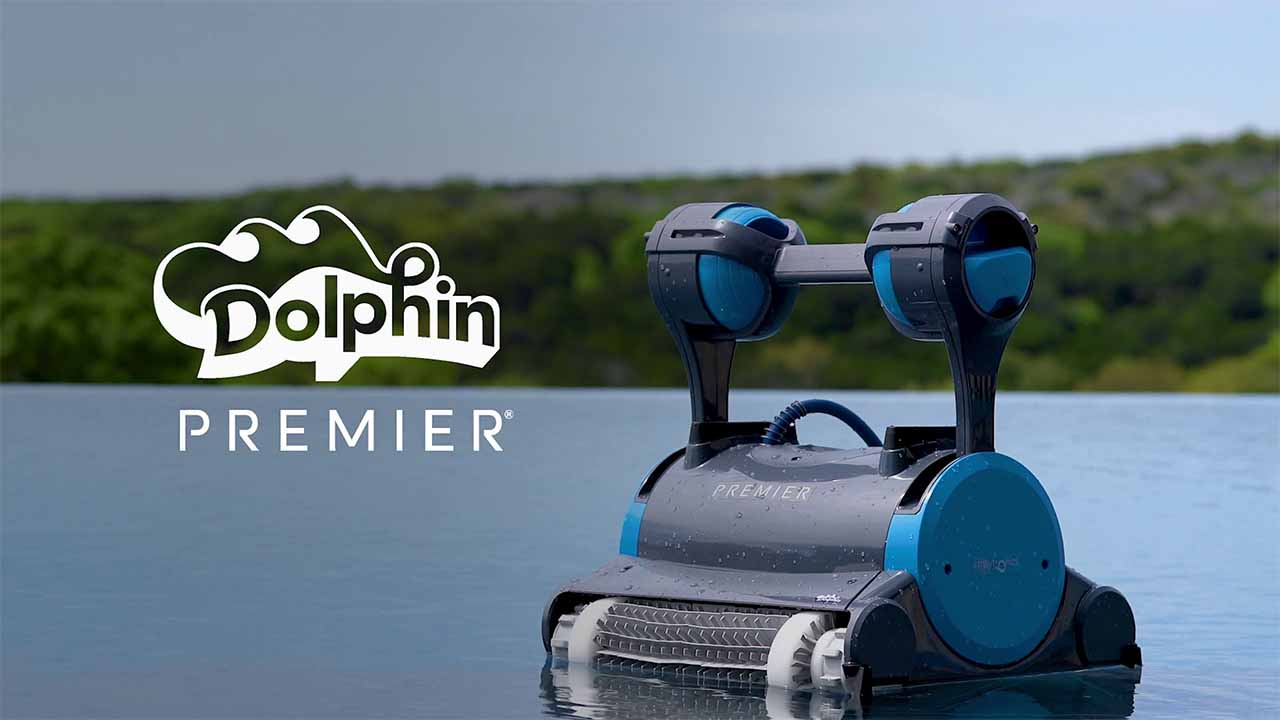
The Premier is second, and the gap is navigation only. It has the same 50 ft rating and the same 360-degree swivel on a 55 ft cable, so it is just as hard to wrap around a peninsula. SmartNav 2.0 scanning covers an irregular pool over 3 hours, a longer cycle than any other pick here, which gives it time to find the far arm.
Where it beats the Sigma is in what it collects. Islands and peninsulas are usually planted, and the Premier's Multi-Media system has an oversized leaf bag ready for what they drop, with NanoFilters for the fines.
Best for
Irregular pools with planted islands or overhanging trees, where leaf volume is the weekly problem.
Keep in mind
It scans without a gyroscope, so expect a less orderly path in a pool with hidden arms.
An irregular pool needs reach and a cable that sheds twists. The Quantum has both, rated to 50 ft with an anti-tangle swivel, and it costs less than the Sigma or the Premier. Its SmartNav 2.0 senses ladders and drains, and its published coverage names sun shelves, Baja ledges and stairs, features that often sit where two sections meet.
At 18.3 lb it is also the lightest of the three 50 ft picks, a real advantage when separated zones mean carrying the robot from one to the next.
Best for
Pools with separated zones cleaned one at a time, or irregular layouts with a shelf or steps.
Keep in mind
The warranty is two years, and it has no gyroscope to fall back on in a maze of arms.
A compact pool with a spa cut-out or a small jog in one wall is within reach of a smaller robot. Rated to 33 ft, the Cayman climbs walls on HyperGrip tracks and runs SmartNav 2.0 through a 2-hour cycle, and its 14.6 lb makes it simple to move.
It is last for a reason specific to this page: there is no swivel on its 50 ft cable, and an irregular pool is exactly where a cable gets wound. With an island or a true peninsula, choose a robot with a swivel even at this size.
Best for
Small pools with a wall jog or spa cut-out and no island or peninsula.
Keep in mind
No swivel, no waterline cleaning, and a timer that runs every day only. Not for runs over 33 ft.
How we ranked them: We matched filtration, brush system, coverage, debris capacity, automation, and warranty to this page's buying need. Pool fit carries more weight than the longest feature list.
Buying criteria
What Counts When the Robot Has to Go Around Something
01
Recovery after a turn
An obstacle knocks the robot off its line. With an onboard gyroscope, the Sigma's SmartNav 3.0 knows its heading and resumes the pattern. SmartNav 2.0 on the other three picks scans and re-plots instead, reaching the same areas less directly.
02
A cable that will not wrap
A peninsula or island is a post for the cable to wind around. Three of the picks, the Premier, Sigma and Quantum, put an anti-tangle swivel in the cable. The Cayman does not, so around an island its cable needs watching.
03
Connected water versus separated zones
A robot cleans the water it can drive through. Two basins joined by an open, full-depth passage are one pool to the robot. A raised divider, a dam wall or a spillway makes two pools, and each one gets its own cycle.
04
Reach along the actual path
A robot's rating is about the longest straight run. In a T or Z shape, also measure the route the cable must follow, around the corners, from the power supply to the farthest arm.
Side-by-side
Side-by-Side Specs for Irregular Pools
Only the models recommended on this page, and only the specs that decide this choice.
Most irregular pools combine a few features. Find yours in the table, because the feature decides whether you need a better navigator, a swivel, or simply a second cycle. One rule covers all of it: a robot cleans connected water, and anything that breaks the connection creates a separate job.
Where the table calls for a second cycle, move the robot and, if the cable will not reach, the power supply too. You can alternate zones from one cleaning day to the next.
Feature
What the robot does
What you do
Peninsula
Works around it; the cable can drag across the tip
Bring the cable in from the wall facing the tip
Island
Circles it; laps in one direction can wind the cable
Rely on a swivel and check the cable after early cycles
T or Z shape
Finds the hidden arm as it scans
Set the power supply near the junction
Narrow channel
Enters if it has room to turn; may skip a tight one
Brush the channel toward open water first
Raised divider or spillway
Stops; it will not cross
Clean each side as its own cycle
Step between floor levels
Works down from the upper level more readily than back up
Start the robot on the upper level
Routing the Cable Around Peninsulas and Islands
Cable trouble, more often than navigation, is what cuts a cycle short in an irregular pool. Think about where the cable enters the water. For a peninsula, the best entry is the wall facing its tip, so the robot can reach either side with the cable fanning out instead of bending around the point. For a T, enter at the junction.
An island has no perfect entry point, which is why the swivel matters: twists from circling spin out along the cable. Feed in only the cable the robot needs, because slack is what loops around rocks and rails.
Honest Limits: Dividers, Spillways and Tight Channels
Three things are outside what any robot on this page will do. It will not climb over a raised divider between two basins. It is not made to ride a spillway from a spa or upper pool into the lower one, so run it with the spillover off. And it may skip a connecting channel too tight to turn around in; once a channel narrows to roughly 5 ft, coverage becomes hit or miss.
None of that is a defect. Clean separated zones one at a time and brush tight channels toward open water first. Unsure whether your layout is one zone or several? Ask a pool expert.
Setup Tips for an Irregular Layout
Sketch the pool from above and mark every place the water narrows or stops, then count the zones.
Bring the cable in at a junction or facing a peninsula's tip, never from behind the obstacle.
For the first three cycles, note where the robot finishes and whether the cable has looped around anything.
When moving the robot to a separated zone, gather the cable, lower the robot in, and let the air escape before starting.
Buy with confidence
Protection beyond the product.
Buying through an authorized dealer gives you a clear warranty and support path. When purchased here, every featured cleaner also includes free shipping, a 30-day in-pool trial, and $0 restocking on returns.
Can a robotic pool cleaner go around an island or a peninsula?
Yes. The robot treats an island or peninsula as more wall and works around it. The risk is the cable, which can wind around the obstacle. The best robotic pool cleaner for irregular-shaped pools therefore has a swivel cable, as the Sigma, Premier and Quantum all do.
Will a robot cross from one section of my pool to another?
Only if the sections are joined by open water wide and deep enough to drive through. A raised wall, a dam or a spillway is a dead end. In that case each section is cleaned as its own cycle, moving the robot and sometimes the power supply.
How narrow a channel will a robotic cleaner go through?
The robot needs room to turn around, not just to pass. As a working figure, a channel around 5 ft wide is marginal for any of these robots, and it may be skipped on some cycles.
Does a multi-level floor stop a robotic cleaner?
A sloped transition between levels is ordinary floor to a tracked robot. A sheer step is different: robots generally work their way down from an upper level more readily than back up. Start the robot on the upper level if you notice that floor being missed.
By Pool Shape
Keep Exploring
Compare another buying need or open the complete guide library.
Count the zones first, because separated water means separate cycles for any robot. Then decide what your pool asks for most. Finding the way around obstacles and hidden arms: the Sigma. Leaves from planted islands: the Premier. Price or a shelf: the Quantum, with the same 50 ft rating. Keep the Cayman for small pools with nothing to wind a cable around.