Our shortlist focuses on Dolphin models available with authorized-dealer support. The buying criteria below also give you a useful framework for evaluating alternatives from any brand.
A Grecian pool is a rectangle with its four corners cut off at 45 degrees. Owners often worry that the angled corners will throw a robot off. They do the opposite: a clipped corner is more open than a square one, so a robot turns out of it easily and debris has less of a pocket to settle in. The shape is not the question.
The questions are the ones any vinyl rectangle raises. Most Grecians are liner pools built in a few standard sizes, with 16 x 32 and 18 x 36 the most common. So the best robotic pool cleaner for Grecian pools is picked by length first, then by whether you want the waterline scrubbed, then by the steps, especially on a rounded Roman end.
$0 restockingNo-cost exchanges
Free shippingNationwide
Up to 3 yearsPremier & Sigma
30-day trialIn your own pool
Expert shortlist
Grecian Pool Picks, Ranked
Ranked for this job, with the reason each model earned its place and the point where it stops being the right choice.
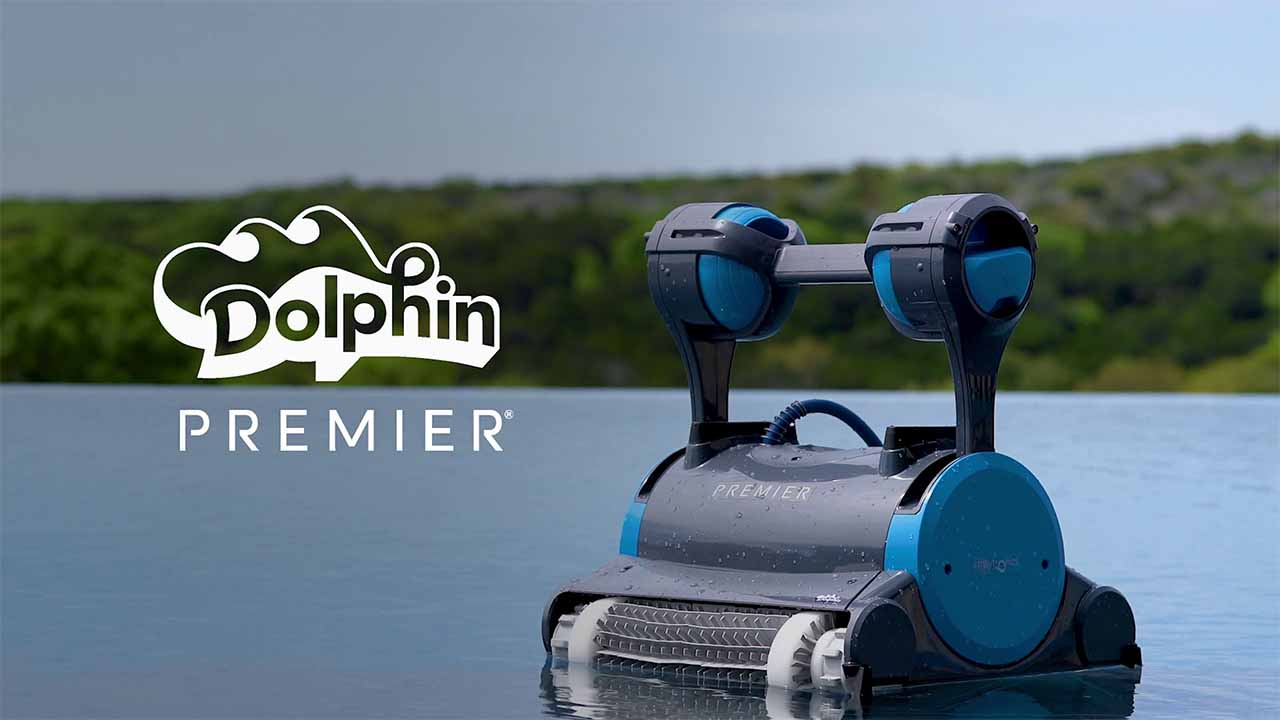
A Grecian is the Premier's home ground: vinyl liner is on its published surfaces, rectangle is on its published shapes, and a 50 ft rating covers every common Grecian size. Its dual scrubbing brushes work the waterline along both long walls in every 3-hour cycle.
Liner pools sit in ordinary backyards under ordinary trees. Multi-Media filtration covers that range, with the oversized leaf bag for the fall and NanoFilters for the fine dust that settles on a liner floor. The timer on the power supply runs every day, every 2 days or every 3 days.
Best for
18 x 36 and 20 x 40 Grecians, and any 16 x 32 owner who wants the waterline scrubbed.
Keep in mind
More robot than a small Grecian strictly needs. On a 16 x 32, compare the live prices on the cards first.
A Grecian is nearly all straight wall, and the Sigma's SmartNav 3.0 with an onboard gyroscope is made to hold a straight line and turn squarely at the end of it, which suits a long 36 or 40 ft floor. Its quad brushes scrub floor, walls and waterline, and a cycle takes 2.5 hours.
The myDolphin Plus app sets a weekly schedule by day and time. It ranks behind the Premier because a plain vinyl rectangle does not need the most expensive pick on the page to be cleaned well.
Best for
Grecian owners who want day-and-time scheduling and filter alerts on a phone.
Keep in mind
Highest price of the four and 24.6 lb to lift over the coping. Its filters are cartridges.
The Quantum is the least expensive of the 50 ft picks, which makes it the natural choice for an 18 x 36 Grecian on a budget. It earns a specific mention for Roman-end pools: its published coverage is floor, walls, waterline, sun shelves, Baja ledges and stairs, so a half-circle stair bay falls inside what it is described to clean.
Vinyl liner is on its surface list, and the XXL MaxBin basket opens from the top with one click. The 2-hour cycle suits a simple floor plan.
Best for
Roman-end and 18 x 36 Grecians where budget matters and the steps should be part of the job.
Keep in mind
The warranty is two years, and the top step still wants a brush because the robot needs water over it.
A 16 x 32 Grecian measures 32 ft, and the Cayman is rated for pools up to 33 ft, so it qualifies with a foot to spare. That is a legitimate fit, not a stretch, provided your own tape agrees with the nominal size.
It lists vinyl liner and rectangle, cleans floor and walls on HyperGrip tracks, and empties through a top hatch with one tab. The trade-offs are plain. Its cable, at 50 ft, has no swivel and wants straightening by hand every few cycles, and the timer offers a single daily setting.
Best for
16 x 32 Grecians and smaller, in-ground or above-ground, when the floor and walls are all you need cleaned.
Keep in mind
It is past its rating in an 18 x 36, and the scum line along those long walls stays a job for a brush.
How we ranked them: We matched filtration, brush system, coverage, debris capacity, automation, and warranty to this page's buying need. Pool fit carries more weight than the longest feature list.
Buying criteria
What Actually Decides the Robot for a Grecian Pool
01
Length, wall to wall
Robots are rated by the pool's longest straight run. A 16 x 32 Grecian is 32 ft, just inside the 33 ft rating of the Cayman. An 18 x 36 is 36 ft and needs a robot rated to 50 ft. Measure your own pool instead of trusting the nominal size.
02
Vinyl on the published surface list
All four picks list vinyl liner among their published surfaces, which means tracks and brushes meant to run on a liner. It does not mean a robot will smooth wrinkles or cope with a liner that has pulled out of its track. Those are liner repairs.
03
Long straight walls
Two long, straight walls collect a visible line of sunscreen and dust at the surface, and vinyl shows it. All three 50 ft picks scrub that line in every cycle. The Cayman cleans floor and walls and stops short of it.
04
Steps and Roman ends
Grecian pools usually have steps in a corner or across the shallow end. A Roman-end pool adds a half-circle bay with steps in it. Only the Quantum, among these four, names stairs in its published coverage. The others reach the lower treads and work around the rest.
Side-by-side
Grecian Pool Picks at a Glance
Only the models recommended on this page, and only the specs that decide this choice.
Most Grecians are built from wall-panel kits, so they come in a short list of sizes. The stated size is the outer rectangle before the corners are clipped, and the length figure is what you compare with a robot's rating. The clipped corners shorten the walls but not the pool: a 16 x 32 Grecian is still a 32 ft run.
Find your pool below, then confirm with a tape measure from end wall to end wall down the centerline of the pool.
Grecian size
Longest run
Robots rated for it
Our pick
16 x 32
32 ft
Premier, Sigma, Quantum, Cayman
Cayman for floor and walls only; Premier to add the waterline
18 x 36
36 ft
Premier, Sigma, Quantum
Premier
20 x 40
40 ft
Premier, Sigma, Quantum
Premier
Grecian-L
Measure both legs
Usually Premier, Sigma, Quantum
Premier, with the power supply at the elbow
Roman Ends, Grecian-L Pools and Other Variants
Three variations change the answer slightly. A Roman-end pool swaps one clipped end for a half-circle bay, almost always holding the steps. The bay does not rule any robot out, but if clean steps matter, the Quantum is the pick that names stairs in its coverage. A double Roman has a bay at each end, so include both when you measure length.
A Grecian-L adds a second leg, usually the shallow end. Treat it as an L-shaped pool: measure both legs and place the power supply at the elbow so the cable reaches each leg without dragging across the inside corner.
Liner Habits That Help Any Robot
Vinyl is on the published surface list of every pick, but a liner pool sets a few house rules:
Keep the water at its normal level. Waterline scrubbing happens where the water is, and a low pool leaves the scum line above the brushes.
Treat wrinkles and loose sections as liner repairs. A robot rides over small wrinkles; it does not flatten them, and a deep fold can stall it.
Take the robot out before shocking or adding chemicals.
Rinse the filter weekly at a minimum, and after every heavy leaf day, so suction stays strong down the whole length.
Setup Tips for a Grecian Pool
Give the power supply a spot beside the middle of a long wall, set back as the manual directs, so both ends are an equal cable run.
After the first cycle, look into the clipped corners at the deep end to confirm the robot is reaching them.
Brush the top step toward the pool before the cycle; the robot picks up what lands on the floor.
Leave unused cable on the deck, not floating in the pool, so it does not drift into the path.
Buy with confidence
Protection beyond the product.
Buying through an authorized dealer gives you a clear warranty and support path. When purchased here, every featured cleaner also includes free shipping, a 30-day in-pool trial, and $0 restocking on returns.
Do the angled corners of a Grecian pool give a robot trouble?
No. A 45-degree corner is more open than a square one, so the robot turns out of it easily. If anything, Grecian corners are easier than rectangle corners. The best robotic pool cleaner for Grecian pools is decided by length and liner, not by the corners.
Is the Cayman big enough for a 16 x 32 Grecian pool?
Yes, by the numbers. The pool's longest run is 32 ft and the Cayman is rated for pools up to 33 ft. Confirm your own measurement, and remember what it does not do: it cleans floor and walls, not the waterline, and there is no swivel on its cable.
Which robot fits an 18 x 36 Grecian pool?
A robot rated to 50 ft: the Premier, Sigma or Quantum. At 36 ft the pool is past the 33 ft rating of the Cayman and the Escape. Among the three, the Premier is our pick for its filtration range and 3-year warranty. The lower-priced alternative is the Quantum.
Will a robot clean the steps in a Roman-end pool?
Partly. Suction only holds where there is depth over the robot, so it reaches the lower treads and usually leaves the top step or two. The Quantum is the pick whose published coverage names stairs. With any robot, brushing the upper steps toward the pool before a cycle takes care of the rest.
By Pool Shape
Keep Exploring
Compare another buying need or open the complete guide library.
Measure the length. At 32 ft or less, the Cayman cleans the floor and walls. The Premier adds the waterline, a longer cycle and a third year of warranty. At 36 ft or more, choose a 50 ft robot: the Premier for range, the Quantum for price or a Roman-end stair bay, the Sigma for phone scheduling. The clipped corners do not enter into it.