Try it in your pool for 30 days. Exchange it for another Dolphin for free, or return it with no restocking fee.
Your bag is empty.
By Pool Shape
Robotic Pool Cleaners for Lagoon Pools: Rock, Beach Entries and Leaves
A lagoon pool is the hardest backyard pool to automate. These three robots handle the open water well, and we are plain about the rock, shallows and length they cannot.
Our shortlist focuses on Dolphin models available with authorized-dealer support. The buying criteria below also give you a useful framework for evaluating alternatives from any brand.
Lagoon pools are designed to look as if nobody built them: boulders at the waterline, a beach entry that fades to nothing, a grotto behind a waterfall, a dark pebble floor, and palms, ferns or oaks leaning over all of it. Every one of those choices makes cleaning harder. The best robotic pool cleaner for lagoon pools is the one that handles the most of that list, and no robot handles all of it.
So this page does two jobs. It ranks three robots for the part of a lagoon a robot can clean: the floor, the smooth walls and, with the right model, the waterline and shelves. And it sets out what is left for you or your pool service.
$0 restockingNo-cost exchanges
Free shippingNationwide
Up to 3 yearsPremier & Sigma
30-day trialIn your own pool
Expert shortlist
Three Robots for Lagoon Pools, Ranked
Ranked for this job, with the reason each model earned its place and the point where it stops being the right choice.
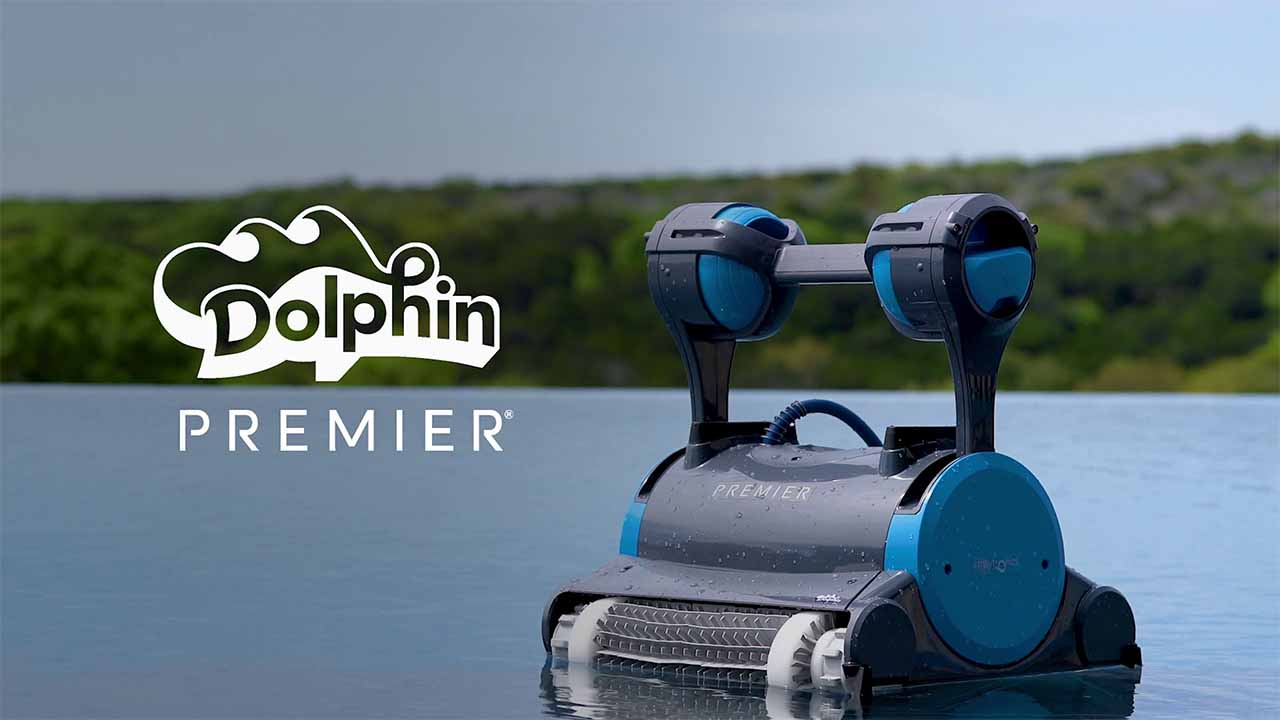
Our order starts with debris, because in a lagoon debris is the daily problem and navigation the occasional one. The Premier's Multi-Media system gives you an oversized leaf bag for fronds, pods and whole leaves, NanoFilters for the pale dust that shows on a dark floor, and standard fine filters for ordinary weeks. All are included and load from the top. Dual commercial-grade ProLine motors move 4,500 GPH through whichever one you fit.
Its 3-hour cycle is the longest of the three, and a 360-degree swivel sits on its 55 ft cable. Pebble and freeform are both on its published lists.
Best for
Planted lagoons up to 50 ft where leaves, fronds and blossoms fill a filter before the cycle ends.
Keep in mind
Shelves are not named in its coverage, and its navigation is scanning. Rock faces and grottos are beyond it, as they are beyond every robot.
On navigation and scrubbing alone, the Sigma is the strongest robot on this page for a lagoon. SmartNav 3.0 uses an onboard gyroscope, so after a boulder or a cove turns it, the robot still knows its heading and carries on with its pattern. Quad scrubbing brushes put four brushes on a textured pebble floor instead of two, and its 4,500 GPH of flow comes from three commercial-grade ProLine motors.
It is second because of what lagoons collect. Its filter set is NanoFilters plus standard cartridges. Without a leaf bag, heavy planting means emptying more often. In a rocky lagoon with little foliage, we would reverse the order.
Best for
Rock-edged lagoons with coves and little overhanging foliage, and owners who want app scheduling.
Keep in mind
Highest price of the three, 24.6 lb to lift over a rock coping, and no leaf bag among its filters.
Many lagoons give a large share of their footprint to a shelf, a wading area or a broad run of steps. The Quantum is the only pick here whose published coverage goes beyond floor, walls and waterline to name sun shelves, Baja ledges and stairs. It still needs water above it to hold suction, so it will not follow a beach entry to the dry end.
It is also the lowest-priced and lightest of the three at 18.3 lb, and its 55 ft cable carries an anti-tangle swivel. NanoFilter panels come in the box. The 2-hour cycle is short for a big lagoon, so run it more often.
Best for
Lagoons up to 50 ft with a large shelf or wading area and a moderate leaf load.
Keep in mind
The warranty is two years and there is no leaf bag. In heavy leaf fall, expect to empty the basket often.
How we ranked them: We matched filtration, brush system, coverage, debris capacity, automation, and warranty to this page's buying need. Pool fit carries more weight than the longest feature list.
Buying criteria
What a Lagoon Pool Demands From a Robot
01
Length, before anything else
Many lagoons run past 50 ft from tip to tip, and 50 ft is the top rating of every robot on this page. Measure the longest straight line through the water, coves included, before you compare a single feature.
02
Capacity for what the planting drops
Lagoons are planted right up to the edge, so leaves, fronds, blossoms and seed pods fall straight in. A fine filter alone clogs early in the cycle. Look for a large-debris option the robot can switch to, and a way to return to fine filtration afterward.
03
Navigation with no straight wall anywhere
A lagoon outline wanders, and rock outcrops interrupt even the walls it has. The Sigma's onboard gyroscope holds a heading through that. SmartNav 2.0 scanning on the other two picks works around the same obstacles by re-plotting as it goes.
04
Shallow zones
Beach entries, sun shelves and wading areas take up a large part of many lagoons. A robot needs water above it to hold suction, so it works a beach entry from the deep side and turns back as the water thins. Of the three picks, only the Quantum's published coverage names sun shelves.
05
A dark pebble floor
Pebble is the classic lagoon finish and it is on the published surface list of all three picks. HyperGrip tracks carry them across the texture and up the smooth sections of wall. Dark pebble also shows pale dust, so fine filtration matters once the leaves are out.
Side-by-side
Lagoon Pool Picks Compared
Only the models recommended on this page, and only the specs that decide this choice.
Better to hear this before buying than after. These jobs are outside the reach of every robot on this page:
Rockwork. Tracks climb smooth walls. They do not climb boulders, stacked stone or artificial rock, and brushes cannot reach into crevices. Rock at the waterline is cleaned by hand.
Grottos and the space behind a waterfall. Falling water and low, tight openings keep a robot out.
The top of a beach entry. The robot turns back where the water gets too thin to hold suction, so the last few feet need a brush.
The surface. Floating leaves belong to the skimmer and the net until they sink.
Pools longer than 50 ft, which is past every rating here.
Lagoons Longer Than 50 Feet
Run a tape along the longest straight shot the water allows, far coves included. At 50 ft or less, any of the three picks is rated for the pool. Beyond that, we will not tell you a 50 ft robot is rated for it, because it is not.
One workaround is to treat a long lagoon as two areas and move the power supply between them so each area stays within cable reach. How well that works depends on the layout. Before you buy for a lagoon over 50 ft, talk to a pool expert with the measurements in hand. At the other extreme, a small lagoon-style pool of 33 ft or less could use the Dolphin Cayman for floor and walls, though its cable has no swivel.
Waterfalls, Bubblers and Dark Pebble
Run the robot with waterfalls, bubblers and deck jets off. Moving water keeps fine debris suspended, and a robot collects what has settled. Still water also keeps the robot from being pushed off course near the falls.
On a dark pebble floor, pale dust, sand and pollen stand out more than they would on white plaster, which is why lagoon owners end up caring about fine filtration as much as leaf capacity. A two-stage routine works well: clear the leaves first, then run a cycle with NanoFilters once the large debris is out.
Setup Tips for a Lagoon Pool
Place the power supply on the open-deck side of the pool so the cable enters over smooth coping, not across boulders.
Start the robot in the deepest open water, not on the beach entry, and let it work toward the shallows on its own.
Brush rock ledges and the beach entry toward deep water before the cycle so the robot collects what you loosen.
Net whole palm fronds and branches out first; they are too long for any robot to swallow.
Buy with confidence
Protection beyond the product.
Buying through an authorized dealer gives you a clear warranty and support path. When purchased here, every featured cleaner also includes free shipping, a 30-day in-pool trial, and $0 restocking on returns.
Can a robotic cleaner climb the rock walls in a lagoon pool?
No. The tracks are made for smooth pool surfaces such as pebble, plaster and tile. Boulders, stacked stone and artificial rock give them no even face to grip, and the brushes cannot reach into crevices. Even the best robotic pool cleaner for lagoon pools cleans up to the rock, not onto it.
How far up a beach entry will a robot go?
As far as there is enough water above it to hold suction. The robot climbs the slope from the deep side, loses grip as the water thins, and turns back. Do not expect the last few feet to be cleaned. The minimum working depth for each model is in its manual.
My lagoon is longer than 50 ft. What are my options?
No robot on this page is rated past 50 ft. You can treat the pool as two areas and move the power supply between them, accepting that this is a workaround, or look at commercial equipment. Send us the dimensions and we will tell you which side of that line your pool is on.
Should the waterfall be off while the robot runs?
Yes, if you can. Still water lets debris settle where the robot can collect it. If the waterfall runs on the same pump as filtration, schedule the robot for hours when the feature is off.
Does heavy leaf fall mean I should skip a robot?
No, but choose for it. Heavy leaves fill a fine filter early, and a full filter means the rest of the cycle does little. The Premier's oversized leaf bag is the answer on this page. With the Sigma or Quantum, plan to empty the filter more often during the drop.
By Pool Shape
Keep Exploring
Compare another buying need or open the complete guide library.
If the pool is over 50 ft, stop and call us before buying anything. If it is within 50 ft, ask what fills it. Leaves and fronds from the planting: the Premier. Little foliage but a maze of rock and coves: the Sigma. A big shelf or wading area: the Quantum. Whichever you choose, keep a brush for the rockwork and the top of the beach, because that part of a lagoon is still yours.