Try it in your pool for 30 days. Exchange it for another Dolphin for free, or return it with no restocking fee.
Your bag is empty.
By Pool Shape
Robotic Pool Cleaners for Narrow Pools, Side Yards and Lap Lanes
A pool 6 to 10 ft wide makes a robot turn again and again and puts more wall than floor in front of it. That changes which features are worth paying for.
Our shortlist focuses on Dolphin models available with authorized-dealer support. The buying criteria below also give you a useful framework for evaluating alternatives from any brand.
Width, not length, is what sets a narrow pool apart. In a pool 6 to 10 ft wide, the kind built along a side yard, in a courtyard or as a lap lane, a robot crosses the floor in a moment and then has to turn. It turns far more often than it would in a wide pool, and every turn puts a little twist into the cable. For that reason, the best robotic pool cleaner for narrow pools is chosen first on its cable.
Two other facts follow from the shape. The walls are a bigger share of the surface than in an ordinary pool, often bigger than the floor, so wall climbing and waterline scrubbing do more of the visible work. And the robot itself needs room to turn.
$0 restockingNo-cost exchanges
Free shippingNationwide
Up to 3 yearsPremier & Sigma
30-day trialIn your own pool
Expert shortlist
Narrow Pool Picks, Ranked
Ranked for this job, with the reason each model earned its place and the point where it stops being the right choice.
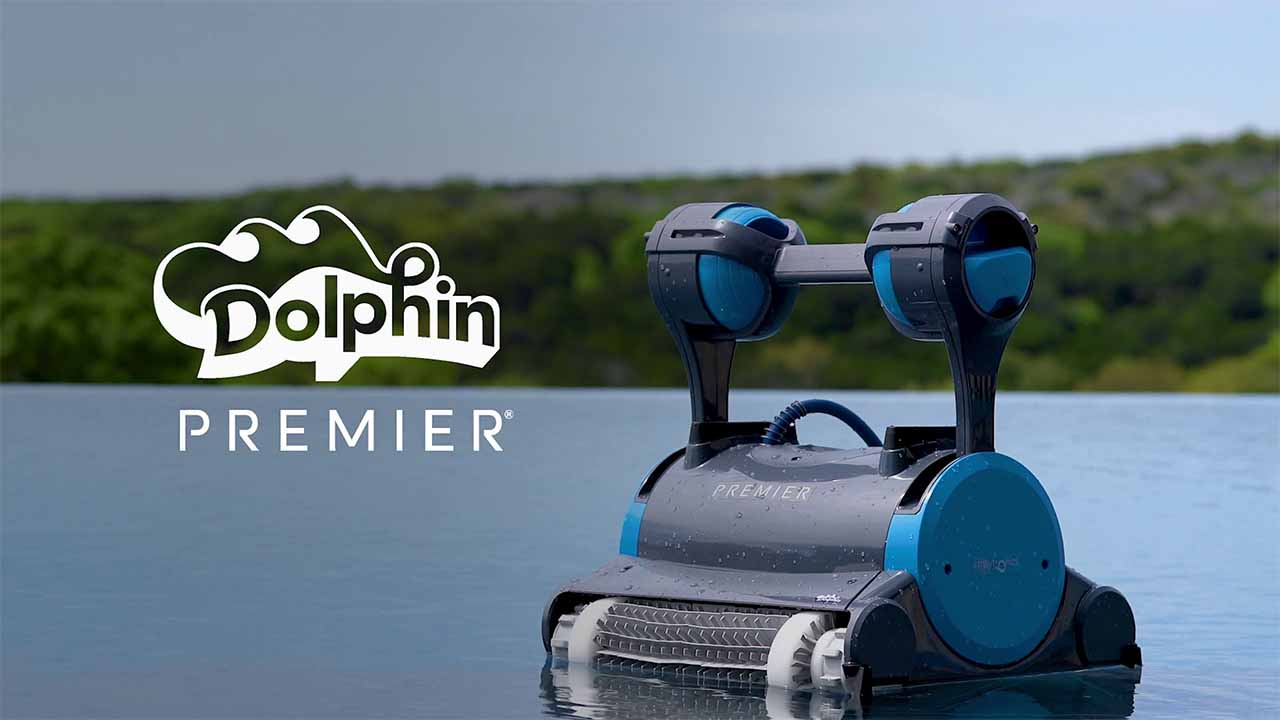
Narrow pools ask for three things, and the Premier has all of them. The 55 ft cable has a 360-degree anti-tangle swivel, so the twist from all that turning never builds. It climbs and scrubs the walls and the waterline, which in a narrow pool is most of the job. And it is rated to 50 ft, which covers the long, thin pools that look smaller than they measure.
The 3-hour cycle leaves time for repeated wall climbs, and the timer on the power supply suits a side-yard pool that collects whatever blows down the fence line.
Best for
Side-yard, courtyard and lap-lane pools from 6 to 10 ft wide and up to 50 ft long.
Keep in mind
It scans without a gyroscope, and all scheduling is on the power supply.
A narrow pool is one long corridor, and the Sigma steers by an onboard gyroscope, which suits holding a heading down a corridor and squaring up after each turn. In a lane of 40 ft or more that helps keep coverage even from one end wall to the other. Quad scrubbing brushes work the walls and waterline, and the cable has the same 360-degree swivel.
It is second because the cable, not the navigation, is the deciding feature here, and the Premier matches it on that for less. Choose it for day-and-time scheduling in the myDolphin Plus app.
Best for
Long lap lanes where orderly end-to-end passes and phone scheduling justify the price.
Keep in mind
Costs the most of the four and weighs 24.6 lb, a consideration when the only deck is a narrow strip.
If the swivel is the feature that matters, the Quantum is the least expensive way to get it among these four. Its 55 ft cable has the anti-tangle swivel, it is rated to 50 ft, and it cleans floor, walls and waterline. Wall area dominates here, and the dual HyperBrush turns twice as fast as a standard brush.
The 2-hour cycle is plenty for a small footprint, and its 18.3 lb is the least weight among the 50 ft picks to lift from a tight deck.
Best for
Budget-minded owners of narrow pools longer than 33 ft, and tight decks where a lighter robot is easier to handle.
Keep in mind
Two years of warranty against three on the Premier, and nothing like a leaf bag for a pool under a hedge.
For a narrow pool of 33 ft or less, the Cayman is rated for the job and priced below the 50 ft picks. It climbs walls on HyperGrip tracks with a HyperBrush, runs a 2-hour cycle, and at 14.6 lb is the easiest of the four to lift.
The catch is exactly what this page is about. There is no swivel, and a narrow pool twists a cable faster than any other shape. It also leaves the tile line alone, and in a narrow pool that band is a large part of what you see.
Best for
Short, narrow pools where budget leads and the owner does not mind handling the cable.
Keep in mind
It lacks the two features a narrow pool rewards most, and its timer has a single every-day setting.
How we ranked them: We matched filtration, brush system, coverage, debris capacity, automation, and warranty to this page's buying need. Pool fit carries more weight than the longest feature list.
Buying criteria
What Matters in a Pool 6 to 10 Feet Wide
01
A swivel on the cable
Constant turning twists a cable more in a narrow pool than in any other shape. A twisted cable coils, shortens and starts steering the robot. The Premier, Sigma and Quantum each carry an anti-tangle swivel that lets the twist spin out. This is the feature to pay for.
02
Walls and waterline
With so little floor, most of what you see is wall and tile line. A robot that cleans floor, walls and waterline covers nearly all of it. One that stops below the surface leaves the most visible band in the pool to a brush.
03
Width to turn in
A robot has to rotate its whole body to change direction. Between about 6 and 10 ft it does so comfortably. Under about 5 ft it starts working against both walls at once, and coverage becomes unreliable for every robot here.
04
Length sets the class
Narrow pools are often long. A lap lane of 40 or 45 ft needs a robot rated to 50 ft no matter how small it looks. Under 33 ft the Cayman is rated for the pool, and the question becomes cable care.
Side-by-side
Narrow Pool Picks: Specs Compared
Only the models recommended on this page, and only the specs that decide this choice.
Run the numbers on an 8 by 40 ft pool that averages 4.5 ft deep. The floor is 320 sq ft. The walls, 96 ft of perimeter times 4.5 ft, come to 432 sq ft. There is more wall than floor before you count the waterline band. A 16 by 32 pool of the same depth has the same 432 sq ft of wall but 512 sq ft of floor, so the balance tips the other way.
That is why a floor-first mindset fails in a narrow pool. Dust on the floor is the smaller part of what makes it look dirty. The film on the walls and the line at the surface are the larger part.
Keeping the Cable Straight in a Long, Thin Pool
Even with a swivel, set the cable up to succeed. Put the power supply at the midpoint of one long side so the robot never has to pull the full cable to reach an end. Feed in only what it needs, because slack in a narrow pool has nowhere to go but under the robot. Before the first cycle, lay a new cable out straight on the deck so its coils relax.
Without a swivel, make untwisting part of the routine: every few cycles, unplug the cable and work the twists out, starting at the robot and moving toward the plug.
When a Pool Is Too Narrow for a Robot
Below about 5 ft of width, we stop recommending a robot with confidence. The machine can bridge from wall to wall while turning, climb when it means to cross, and repeat the same stretch. For a slot between a pool and a spa or a trough-style lap lane, a brush and a manual vacuum are quicker than fighting the geometry. If your pool is between 5 and 6 ft wide, tell us the exact width and depth. Our 30-day in-pool trial covers the doubt.
Setup Tips for Narrow Pools
Measure the width at the narrowest point, including any bench or step that juts in, not just across the open middle.
Hang spare cable on the deck in loose loops. Never leave it floating in a pool this narrow.
Check the cable for coils once a week. With a swivel that is a glance; without one it is a few minutes of untwisting.
Buy with confidence
Protection beyond the product.
Buying through an authorized dealer gives you a clear warranty and support path. When purchased here, every featured cleaner also includes free shipping, a 30-day in-pool trial, and $0 restocking on returns.
How narrow is too narrow for a robotic pool cleaner?
As a working rule, 6 to 10 ft is comfortable and about 5 ft is where every robot on this page becomes marginal, because the machine needs room to rotate. Give us the narrowest width and we can tell you whether the best robotic pool cleaner for narrow pools is a robot at all in your case.
Why does the cable tangle more in a narrow pool?
Because the robot turns more. Every turn rotates the robot against its cable, and in a pool only a few feet wide the turns come one after another. A swivel lets the cable spin free of the robot and shed the twist. Without one, the twist stays until you remove it by hand.
Does a small narrow pool really need a 50 ft robot?
Only if it is long. Rating follows length, not volume. A 9 by 42 ft lap lane holds little water but still needs a robot rated to 50 ft. A 7 by 24 ft courtyard pool is within the 33 ft rating of the Cayman.
Is waterline cleaning worth it in a side-yard pool?
More than in most pools. In a narrow pool you are never more than a few feet from the tile line, and the waterline band is a larger share of the total surface. The Premier, Sigma and Quantum scrub it in every cycle.
Is the Dolphin Escape a fit for a narrow pool?
Yes, with the same caveats as the Cayman. The Escape is rated to 33 ft and cleans floor and walls, but there is no swivel on its 40 ft cable, so untwisting is part of ownership. We shortlist the Cayman ahead of it here for its longer cable and built-in daily timer.
By Pool Shape
Keep Exploring
Compare another buying need or open the complete guide library.
Buy for the cable first. If the pool is over 33 ft long, choose a 50 ft robot with a swivel: the Premier for the fullest fit, the Quantum for the lowest price of the three, the Sigma for the tidiest lines. If it is 33 ft or under, the Cayman is rated for it, provided you accept untwisting the cable and brushing the tile line yourself. Under about 5 ft wide, ask us before buying any robot.