Try it in your pool for 30 days. Exchange it for another Dolphin for free, or return it with no restocking fee.
Your bag is empty.
By Feature
Robotic Pool Cleaners with Automatic Waterline Parking: The Closest Options
Waterline parking is a retrieval convenience these corded robots do not list, so this guide ranks the ones that are lightest and simplest to bring up and lift out.
Our shortlist focuses on Dolphin models available with authorized-dealer support. The buying criteria below also give you a useful framework for evaluating alternatives from any brand.
Before you buy
None of the robots in this guide lists automatic waterline parking. When a cycle ends, you bring the robot to the surface by drawing in its cable. This page ranks the closest thing we can honestly offer: the robots that are easiest to retrieve, ordered by how little you have to lift and how seldom.
Automatic waterline parking is a simple idea. When the cycle ends, the robot climbs the wall and waits at the surface, so you can reach down and pick it up instead of hauling it off the floor. It appears mostly on cordless robots, which have no cable to pull on. If you came looking for the best robotic pool cleaner with automatic waterline parking, what you are really after is a robot that is easy to get out.
None of the five Dolphins we compare lists a parking or pickup mode, and we will not invent one. Every one of them is corded, and the cable does the job that parking does elsewhere: draw it in gently and the robot comes to you. What differs is how much you are lifting when it arrives, and how often.
$0 restockingNo-cost exchanges
Free shippingNationwide
Up to 3 yearsPremier & Sigma
30-day trialIn your own pool
Expert shortlist
Closest Picks for Easy Retrieval, Ranked
Ranked for this job, with the reason each model earned its place and the point where it stops being the right choice.
The Cayman has no parking mode. It leads because it makes the manual version nearly effortless. At 14.6 lb it is a one-handed lift for many people, about six pounds lighter than the Premier, and its 50 ft cable leaves plenty of slack to draw the robot across a pool of up to 33 ft from wherever you stand.
Its timer runs every day, so the robot can stay in the water between scheduled cycles and come out about once a week for a filter rinse. It weighs 0.4 lb more than the Escape, which has no timer as standard and a shorter cable.
Best for
Pools up to 33 ft, in-ground or above-ground, where a light lift and few retrievals matter most.
Keep in mind
It does not park at the surface, has no swivel, and cleans floor and walls only. Not for pools over 33 ft.
At 14.2 lb the Escape weighs less than any other robot in this guide, and for an above-ground pool, where the lift goes over a wall, that is the figure that matters. Like the Cayman it has no parking feature: you draw it in by the cable and lift it by the handle.
It is second because retrieval is likely to be more frequent. There is no timer as standard, though the Automation Timer power supply is an optional upgrade, so it is usually run on demand and taken out afterward. The 40 ft cable also leaves less slack on a wide pool. It is the lowest-priced pick here.
Best for
Above-ground pools and small in-ground pools where the lowest lift weight and the lowest price come first.
Keep in mind
Its 40 ft cable is the practical limit. On an above-ground round larger than about 24 ft, check the run from the power supply first; the Cayman's 50 ft cable is the safer choice.
For Pools over 33 Feet: Fewer Lifts, Not Lighter Ones
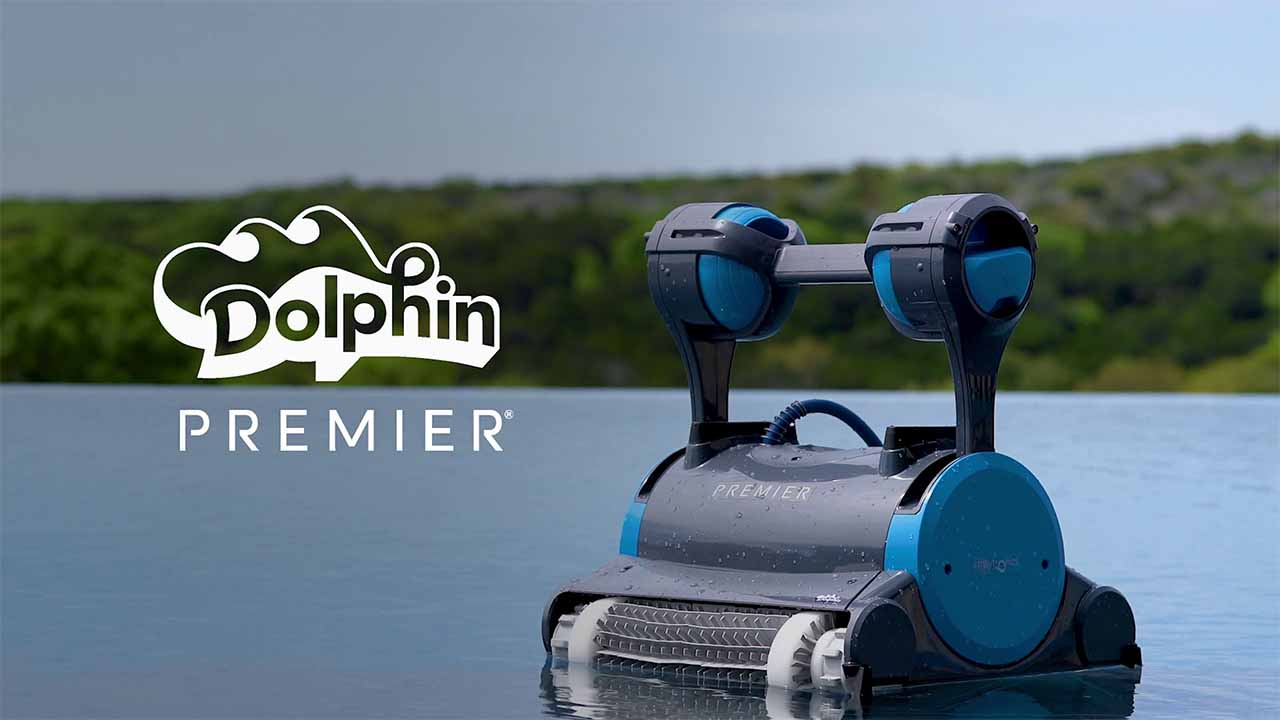
The Premier is the heaviest of these three at 20.3 lb, and it has no parking mode either. It is here because the two robots above stop at 33 ft, and a larger in-ground pool still needs a retrieval plan. The Premier's answer is to make lifts rare and predictable.
Its weekly timer runs the robot every day, every 2 days or every 3 days, so it stays in the water between scheduled cycles, and the full-filter indicator on its power supply shows when the filter needs emptying. A 360-degree anti-tangle swivel on the 55 ft cable means it draws in without a knot of twists.
Best for
In-ground pools from 33 to 50 ft where the robot will live on its timer and come out mainly for filter rinsing.
Keep in mind
About six pounds heavier than the two picks above. If lifting is hard for you, add a caddy for the carry or ask us about the 18.3 lb Quantum.
How we ranked them: We matched filtration, brush system, coverage, debris capacity, automation, and warranty to this page's buying need. Pool fit carries more weight than the longest feature list.
Buying criteria
What Actually Makes a Robot Easy to Retrieve
01
Weight at the Lift
The moment that strains a back is the last foot, from the water to the deck. Dry weights for these picks run from 14.2 lb to 20.3 lb, and a robot is briefly heavier until the water drains from it.
02
A Cable to Draw It In
A corded robot is never out of reach. Take up the slack, draw the cable in smoothly, and the robot rises and comes toward you. Pull gently: yanking the cable, or hoisting the robot clear of the water by it, is how cables get damaged.
03
How Often It Comes Out
The best retrieval is the one you skip. A robot with a timer can stay in the water between scheduled cycles, so it is lifted for the weekly filter rinse and before chemicals go in, not after every run.
04
The Height You Lift Over
An in-ground pool means lifting from water level to a deck at your feet. An above-ground pool means lifting over a wall at waist height or higher, where every pound counts for more. Above-ground owners should weigh this factor most heavily.
Side-by-side
Lift Weight, Cable and Timer Compared
Only the models recommended on this page, and only the specs that decide this choice.
The cable is how these robots come home. Done properly it is quick, and it puts no strain on the cable.
Wait for the cycle to end, or stop it at the power supply, so the robot is not driving against you.
Take up the slack and draw the cable in hand over hand, slowly. The robot lifts off the floor and glides toward you.
When it reaches the wall, raise it to the surface and take hold of the handle. From this point the cable carries no weight.
Hold it at the surface while the water runs out, then lift it clear and stand it on its tracks.
Why Corded Robots Do Not Park at the Waterline
Parking exists to solve a cordless problem. A robot with no cable stops wherever its cycle ends, and without a parking routine its owner needs a hook pole to fish it out. Climbing to the surface and waiting there is the workaround.
A corded robot has its retrieval line built in, which is why the feature is not on the spec sheet of any robot here. The cord also brings something parking cannot: with nothing to recharge, a robot on a timer can remain in the pool between scheduled cycles. A robot that must be lifted out to charge after every run is handled far more often than one lifted once a week.
If Lifting Is the Real Problem
Be realistic about what any feature can do. Parked at the waterline or drawn in by its cable, a robot still has to be lifted from the water to the deck, and that lift is the hard part. If 14 lb at the pool edge is more than you want to handle, plan around it.
Use a timer so the lift is weekly, not daily. Add a caddy so the trip to storage is on wheels, knowing it does not help with the lift itself. And if you are unsure which robot you can manage, ask a pool expert before you order.
Make Retrieval Easier
Pick one retrieval spot with firm footing and use it every time; the robot comes to wherever you draw the cable from.
Give the robot a few seconds at the surface to shed its water. That is weight you never have to raise.
Lift with the robot close to your body, not at arm's length over the water.
Never hoist the robot out of the pool by its cable. The cable brings it to the surface; the handle lifts it out.
Buy with confidence
Protection beyond the product.
Buying through an authorized dealer gives you a clear warranty and support path. When purchased here, every featured cleaner also includes free shipping, a 30-day in-pool trial, and $0 restocking on returns.
Do any Dolphin robots park at the waterline when they finish?
No. Not one of the five Dolphins on this page lists automatic waterline parking or any pickup mode. When a cycle ends you bring the robot up by drawing in its cable, then lift it by the handle.
Is a robotic pool cleaner with automatic waterline parking easier to live with than a corded robot?
It solves a different problem. Parking gets a robot with no cable within reach. A corded robot is always within reach through its cable, and on a timer it can stay in the water between scheduled cycles, which a robot that must come out to recharge cannot. For many owners, fewer lifts beat easier ones.
Is it bad to pull a pool robot up by its cable?
Drawing it gently to the surface with the cable is the normal method for a corded robot. What harms cables is jerking them, or hoisting the robot's full weight out of the water by the cable. Once the robot is at the surface, switch to the handle.
Would the Quantum or the Sigma be easier to retrieve?
The Quantum, at 18.3 lb, is lighter than the Premier and a sound choice for a pool up to 50 ft if lift weight is your first concern; it is outside this shortlist, not out of consideration. At 24.6 lb the Sigma outweighs the other four, so think twice about it if lifting worries you.
By Feature
Keep Exploring
Compare another buying need or open the complete guide library.
If automatic waterline parking is a requirement, none of these robots meets it, and you should know that before you order. If what you need is a robot that is easy to get out, choose by weight and pool size. For a pool no longer than 33 ft that means the Cayman, or the Escape when the lowest weight and price come first. For a larger in-ground pool it means the Premier, lifted about once a week. Our 30-day in-pool trial lets you find out whether the lift suits you.